

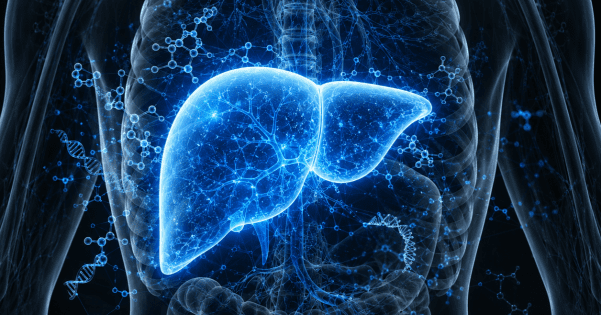
Svetinorm is the liver peptide bioregulator, a capsule of peptide complex A-7 drawn from liver tissue and studied for supporting hepatocyte function and healthy liver aging. It’s worth a closer look because the liver is the one major organ that famously rebuilds itself, and that ability fades with age for a reason the peptide research happens to speak to directly.
Most articles on Svetinorm open with the liver’s job list and move straight to a sales pitch. The more interesting story sits one level down, in what changes inside an aging liver cell and what short peptides have been shown to do about it.
Key Takeaways

The Short Version
Svetinorm is a liver peptide bioregulator (complex A-7) studied for supporting hepatocyte protein synthesis and healthy liver aging.
The aging liver loses regenerative capacity largely through genes being switched off, not through the machinery being lost.
In cultured liver cells, the liver-derived short peptide raised protein synthesis most in cells from old rats, while a pineal peptide changed nothing in the same cells.
The evidence base is cell, tissue, and animal research plus human ex vivo work, which makes sourcing and third-party testing worth checking before you buy.

The Liver Rebuilds Itself, Then Gets Slower At It
Your liver can regrow a large portion of itself after injury or surgery, which puts it in a category almost no other organ occupies. That regenerative headroom is the reason liver donation works.
Age narrows it. The loss of regenerative capacity is described as the most dramatic age-associated change in the liver, a finding first reported more than fifty years ago and still being unpacked, according to a review in Trends in Endocrinology & Metabolism.
A 2025 review of liver aging lists what’s shifting underneath that: epigenetic alterations, loss of proteostasis, and impaired regenerative responses, alongside mitochondrial changes and cellular senescence.
Proteostasis is the balance between making, folding, and clearing proteins. For an organ that manufactures albumin, clotting factors, and most of your circulating proteins, that balance is close to the whole job.
Silenced Genes, Not Worn-Out Cells
Here’s the part that reframes the whole conversation. The aging liver doesn’t mostly lose the equipment for regeneration. It stops reading the instructions.
Aging livers accumulate a protein complex that parks on growth-related gene promoters and silences them, and the review above points to epigenetic silencing as a crucial mechanism in the age-dependent slowdown of liver proliferation. The genes are still there. Access to them tightens.
That matters for anyone evaluating a liver peptide, because chromatin access is precisely what this class of compounds has been studied for. Short peptides are small enough to be carried into cells by ordinary peptide transporters, the POT and LAT carrier families, which puts them in reach of DNA rather than stuck at the cell surface. From there, a systematic review of peptide research documents their influence on gene expression.
Two mechanisms pointing at the same lock is a better reason to be interested than any marketing claim on a label.

The Experiment That Made Liver Peptides Interesting
Liver peptides earned attention through a clean piece of comparative work, and it’s still the most persuasive thing in the file.
Researchers cultured hepatocytes from rats aged one to twenty-four months and measured protein synthesis. The liver-derived short peptide, built from amino acid analysis of liver polypeptide preparations, raised protein synthesis across every age group, with the biggest effect in cells from the oldest animals. It also restored the amplitude of the natural synthesis rhythm in old cells.
The control is what makes it land. The pineal peptide Epitalon, a well-known geroprotector in its own right, produced no change in the same liver cells. One tissue’s peptide worked in that tissue. Another tissue’s peptide didn’t.
That’s tissue specificity demonstrated head to head rather than asserted, and it lines up with broader work where polypeptides from seven different tissues selectively stimulated their own matching tissue cultures in young and old rats.
Two more findings fill out the picture:
- In organotypic liver tissue culture, the peptide supported structural and functional homeostasis of liver cell populations, with activity directed toward cellular and intracellular regeneration processes.
- In lymphocytes from older human donors, the same peptide activated ribosomal genes and decondensed pericentromeric heterochromatin, releasing genes that had been repressed by age-related condensation.
That last one is human tissue, and ribosomal genes are the protein-synthesis genes. The chromatin story and the hepatocyte story are the same story seen from two angles.
What’s Actually in a Svetinorm Capsule
Svetinorm is the natural liver peptide complex, and BioLongevity sells it as BioLiver (A-7) at 40 mg of peptide complex per capsule with no proprietary blend hiding the amount.
The liver bioregulator literature runs on two tracks worth telling apart:
| Natural complex (Svetinorm, A-7) | Synthesized short peptide (KEDA) | |
|---|---|---|
| What it is | Peptide complex extracted from liver tissue | A four-amino-acid peptide built from analysis of that complex |
| Where it appears | Supplement capsules, including BioLiver | Most of the cell and tissue-culture studies above |
| Research overlap | A 2020 review covers both together | A 2020 review covers both together |
That review of the liver polypeptide complex and its short peptide counterpart reported concordant effects across animal and in vitro liver research, including support for antioxidant and immune status, with the strongest effects observed in aging.
Being straight about the tier: there’s no published human clinical trial on Svetinorm itself. What exists is a coherent mechanism, replicated tissue-specific findings in cultured liver cells, and human ex vivo chromatin data. For a healthy-aging supplement, that’s a real foundation and an honest one, which is more than most peptide products on the market can put in writing.
If the category is new to you, start with our guide to what peptide bioregulators are, or read the backstory of the Khavinson peptide research program that produced all of these compounds. For the cell-signaling side, our primer on the science of peptides goes deeper.
Fitting Svetinorm Into a Longevity Routine
Bioregulators are taken in courses rather than continuously, which is the single biggest difference between them and a daily multivitamin. A course typically runs about a month, then repeats after a gap of several months. Follow the product label for the exact protocol.
Svetinorm tends to suit a few kinds of people:
- Adults over 40 building a proactive, organ-by-organ longevity routine.
- People whose livers carry real daily load from alcohol, high supplement volume, or a demanding training and nutrition program.
- Bioregulator users adding a metabolic anchor to an existing stack, often alongside BioPancreas (A-1) for the pancreas or the kidney bioregulator Pielotax for the other half of the body’s filtration work.

One safety point carries real weight here and only needs saying once. Your liver metabolizes most prescription medications, so if you take medication regularly or you’ve been told your liver enzymes are elevated, talk with your clinician before adding a liver-targeted supplement. That’s about coordinating with your existing care, not a warning against the peptide.
Verifying a Liver Peptide Before You Swallow It
Quality control matters more for a liver supplement than for almost any other category, for an obvious reason. Whatever’s in the capsule, including anything that shouldn’t be, gets processed by the organ you’re trying to support.
Three things to check:
- A Certificate of Analysis for the actual batch, including contaminant and heavy metal screening.
- A named tissue source and a stated dose. Tissue specificity is the entire mechanism, so the source belongs on the label rather than buried in a blend.
- Third-party testing and U.S. GMP manufacturing, which turn a quality claim into something you can check.
BioLongevity publishes a Certificate of Analysis for every batch. With an ingredient this specialized, proof should come before the promise.
Frequently Asked Questions
What are the main Svetinorm peptide benefits?
Svetinorm is studied for supporting hepatocyte protein synthesis, cellular regeneration processes in liver tissue, and healthy liver aging. The research is cell, tissue-culture, and animal work plus human ex vivo data, so it belongs in a long-term routine rather than being used for anything acute.
Is Svetinorm the same as Livagen?
They’re related but not identical. Svetinorm is the natural liver peptide complex A-7 extracted from liver tissue. Livagen is the synthesized four-amino-acid peptide designed from analysis of that complex, and it’s the form used in most of the published cell studies.
How is Svetinorm taken?
Peptide bioregulators are traditionally taken in courses of roughly a month, repeated after a break of several months rather than used continuously. Formats and concentrations vary between suppliers, so follow the specific product label.
Can Svetinorm be taken with medication?
Ask your clinician first. The liver handles the metabolism of most medications, which makes it the right conversation to have before adding a liver-targeted supplement to an existing prescription routine.
Can Svetinorm be stacked with other bioregulators?
Yes, and it commonly is. Organ-system stacking is the standard approach with this category, and you can see how the tissues line up across the full peptide bioregulator collection.
Read More From the BioLongevity Blog
- Endoluten Peptide Benefits: The Pineal Bioregulator
- Glandokort and “Adrenal Fatigue”: What the Science Really Says
- Best Longevity Supplements: What to Look For
Ready to give your liver targeted support built on verified quality? BioLiver – A-7 Liver Peptide Bioregulator (Svetinorm) delivers 40 mg of the natural liver peptide complex per capsule, single-ingredient and third-party tested, with a published Certificate of Analysis so you can check the work before you take the capsule.
Ask a qualified clinician before starting any supplement if you are pregnant, nursing, taking medication, or managing a medical condition.
These statements have not been evaluated by the Food and Drug Administration. This product is not intended to diagnose, treat, cure, or prevent any disease.
References
- Timchenko NA. Aging and liver regeneration. Trends in Endocrinology & Metabolism. 2009;20(4):171-176. DOI
- Ganguly S, Sakane S, Hokutan K, Zhang V, Miciano C, Wang A, Brenner DA, Kisseleva T. Aging and Aging-Related Senescence in Liver. Seminars in Liver Disease. 2025. DOI
- Brodskiĭ VIa, Khavinson VKh, Zolotarev IuA, Nechaeva NV, Malinin VV, Novikova TE, Gvazava IG, Fateeva VI. Rhythm of protein synthesis in cultures of hepatocytes from rats of different ages. Norm and effect of the peptide livagen. Izvestiia Akademii Nauk. Seriia Biologicheskaia. 2001;(5):517-521. PubMed
- Khavinson VKh, Lezhava TA, Monaselidze JG, Dzhokhadze TA, Dvalishvili NA, Bablishvili NK, Ryadnova IY. Effects of Livagen peptide on chromatin activation in lymphocytes from old people. Bulletin of Experimental Biology and Medicine. 2002;134(4):389-392. DOI
- Riadnova IIu, Filippov SV, Iuzhakov VV. Functional morphology of an organotypic liver culture exposed to the peptide livagen. Advances in Gerontology. 2002;10:88-94. PubMed
- Kuznik BI, Khasanova NB, Ryzhak GA, Meshcheriakova IE, Khavinson VK. The influence of polypeptide liver complex and tetrapeptide KEDA on organism physiological function in norm and age-related pathology. Advances in Gerontology. 2020;33(1):159-164. PubMed
- Ryzhak AP, Chalisova NI, Lin’kova NS, Khalimov RI, Ryzhak GA, Zhekalov AN. Polypeptides influence on tissue cell cultures regeneration of various age rats. Advances in Gerontology. 2015;28(1):97-103. PubMed
- Khavinson V, Linkova N, Kozhevnikova E, Dyatlova A, Petukhov M. Transport of Biologically Active Ultrashort Peptides Using POT and LAT Carriers. International Journal of Molecular Sciences. 2022;23(14):7733. DOI
- Khavinson VK, Popovich IG, Linkova NS, Mironova ES, Ilina AR. Peptide Regulation of Gene Expression: A Systematic Review. Molecules. 2021;26(22):7053. DOI