


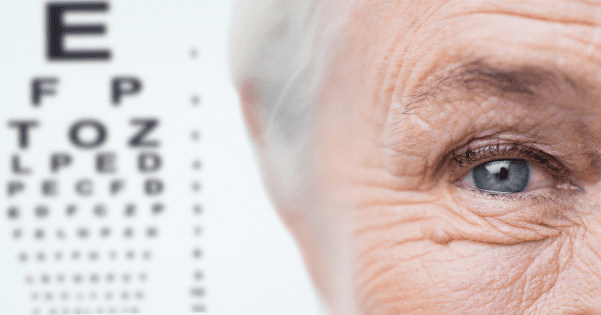
Visoluten is an oral peptide bioregulator made from retina (eye tissue) peptides, designed to support retinal tissue and everyday visual function as part of a wellness routine. It belongs to the A-11 bioregulator category built on the peptide research of Professor Vladimir Khavinson and the St. Petersburg Institute of Bioregulation and Gerontology.
If you spend your day in front of screens and want to be proactive about long-term eye health, Visoluten is one of the more targeted options in the peptide space. This guide covers what it is, how the peptides work, what the research honestly shows, and how to choose a quality product.
Key Takeaways

The Short Version
Visoluten is the A-11 retina peptide bioregulator, an oral capsule that supports retinal tissue and everyday visual function.
It delivers short peptides from eye tissue that the body can use to support normal cellular activity in the retina.
The strongest human research on retina peptides used an injectable clinical form called Retinalamin, while Visoluten is the oral wellness bioregulator.
Look for third-party testing, a Certificate of Analysis, and a clearly labeled A-11 peptide complex before you buy.

What Is Visoluten?
Visoluten is a retina peptide bioregulator: an oral capsule containing a short-peptide complex (labeled A-11) extracted from eye tissue. It’s taken as a short daily course rather than a single dose.
Peptide bioregulators come from the work of Professor Vladimir Khavinson, whose group spent decades studying how short peptides interact with cells. A systematic review of this field describes short peptides as signaling molecules that can influence gene expression and protein synthesis across many tissues, including in humans.
The idea behind the bioregulator category is tissue specificity. Each bioregulator is derived from a particular organ or tissue and is intended to support that same system. Visoluten’s A-11 complex comes from eye tissue and is positioned for retina and visual-system wellness.

How Visoluten’s Retina Peptides Work
Short peptides are small enough to be absorbed and to reach cells, where researchers are investigating how they influence normal cellular activity. In that review, short peptides of two to seven amino acids were shown to enter cells and interact with DNA and histone proteins, which the authors link to the regulation of protein synthesis (Khavinson et al., 2021).

For the retina specifically, the evidence is earlier-stage but consistent with that mechanism. In cell-based research, a retina peptide preparation stimulated the proliferation of retinal and pigment epithelial cells in culture, and did so in a tissue-specific way.
The practical takeaway is simpler than the biology. Visoluten is designed to give the body retina-derived peptides that support the retina’s own cellular upkeep, rather than acting like a stimulant or a drug.
What the Research Says About Retina Peptides
The strongest human research on retina peptides used an injectable clinical preparation, Retinalamin, not the oral Visoluten capsule. Both share the same retina-peptide origin and the same research lineage, so the studies are useful context, but they were run on a different form in a clinical setting.
That distinction is worth stating plainly, because it’s where a lot of marketing gets loose. Human clinical work on the injectable form has looked at specific eye conditions:
- In a clinical study of adults with diabetic retinopathy, the injectable retina peptide was associated with positive structural and functional changes in the retina on imaging and electrophysiology testing.
- In a controlled study of patients with primary open-angle glaucoma, adding the injectable peptide bioregulator was associated with stabilization of retinal ganglion-cell measures alongside standard care.
- In an older study of children with inherited retinal degeneration (abiotrophy), most treated with the injectable form showed improved visual acuity, with a smaller share showing enlarged visual fields.
Cell-based research helps explain the mechanism. A retina peptide preparation was not toxic to isolated retinal cells and reduced the damage caused by glutamate, a driver of retinal cell stress. A related short peptide, Epitalon, improved wound healing in cultured human retinal pigment epithelial cells exposed to high glucose.
Results in animal models have been mixed rather than uniform. One rabbit study of light-induced retinal damage found no significant protective effect from the injectable peptide, a reminder that the science is still developing.
| Evidence tier | What was studied | Form used |
|---|---|---|
| Human clinical | Diabetic retinopathy, glaucoma, inherited retinal degeneration | Injectable (Retinalamin) |
| Cell-based | Retinal cell survival, RPE proliferation and wound healing | Peptide preparations in culture |
| Animal | Light-induced retinal damage (mixed results) | Injectable |
None of this means the oral capsule reproduces those clinical outcomes. It means the retina peptide has a real research base, and BioLongevity would rather show you where that base is strong and where it’s still emerging than claim more than the evidence supports.
What Visoluten May Support Day to Day
For everyday use, Visoluten is positioned as retina and visual-system support, not as a treatment for any eye condition. It’s the kind of proactive addition people reach for when screen time, aging, and light exposure are stacking up.
Used as a dietary supplement, Visoluten is designed to support:
- Normal retinal tissue and cellular activity
- Everyday visual function and eye comfort
- A proactive eye-wellness routine alongside good habits like screen breaks and UV protection
Think of it as one input in a broader routine. The habits around it, from sleep to lighting to regular eye exams, still do a lot of the work.
How to Use Visoluten
A typical Visoluten serving is two capsules per day, usually taken before a meal, in courses rather than continuously. Many bioregulator protocols run a course of about 10 to 30 days and repeat it a few times per year.
Courses with breaks in between are the standard approach for this category. If you’re new to bioregulators, starting with a single course and seeing how you respond is a reasonable way in.
One safety note worth keeping: if you’re pregnant, nursing, taking medication, or managing an eye or medical condition, talk with a qualified clinician before starting Visoluten or any peptide product. This is general educational guidance, not a personal protocol.
What to Look for in a Retina Peptide Bioregulator
Quality is the single biggest variable with peptide bioregulators, because you can’t judge purity by looking at a capsule. Before you buy, check that the product is transparent about what’s inside and how it was tested.
Green flags to look for:
- Third-party testing for purity and potency, with a Certificate of Analysis you can actually see
- A clearly labeled A-11 retina peptide complex, not a vague “proprietary eye blend”
- Manufacturing to documented quality standards
- Straightforward claims that match the evidence, without disease cures or miracle language
Those are the standards BioRetina, BioLongevity’s A-11 retina peptide bioregulator (Visoluten), is built to meet. It’s made for people who want proactive eye-wellness support and want to verify quality before they take it, backed by third-party testing and a transparent A-11 formula. If you’re adding a retina peptide to your routine, start with one you can check.
Frequently Asked Questions
Below are the questions people most often ask before trying Visoluten.
Is Visoluten the same as Retinalamin?
No. Retinalamin is an injectable retina peptide preparation used in clinical settings and studied in eye-disease research. Visoluten is the oral bioregulator (A-11) sold as a dietary supplement for everyday eye-wellness support. They share a retina-peptide origin, but they are different products in different forms.
Can Visoluten improve eyesight?
Visoluten is designed to support normal retinal tissue and visual function, not to correct vision or treat eye disease. The human studies showing measurable eye changes used the injectable clinical form, so the oral capsule shouldn’t be expected to reproduce those outcomes. See a qualified eye-care provider for any vision concern.
Is Visoluten safe?
Peptide bioregulators are generally well tolerated at labeled servings, and in cell research the retina peptide was not toxic to retinal cells (Avetisov et al., 2019). That said, safety data on the oral supplement is limited, so anyone pregnant, nursing, on medication, or managing a condition should check with a clinician first.
How long does Visoluten take to work?
Bioregulators are used in courses rather than for instant effects, and any support for long-term eye health builds gradually. A typical course runs a few weeks and is repeated a few times per year, so consistency matters more than a quick result.
Can you stack Visoluten with other bioregulators?
Yes, many people pair retina support with bioregulators for related systems, such as vascular or brain support, as part of a broader routine. If you take medication or have a medical condition, review any stack with a clinician before starting.
Ask a qualified clinician before starting any supplement if you are pregnant, nursing, taking medication, or managing a medical condition.
These statements have not been evaluated by the Food and Drug Administration. This product is not intended to diagnose, treat, cure, or prevent any disease.
References
- Khavinson VK, Popovich IG, Linkova NS, Mironova ES, Ilina AR. Peptide Regulation of Gene Expression: A Systematic Review. Molecules. 2021;26(22):7053. DOI
- Khavinson VKh, Zemchikhina VN, Trofimova SV, Malinin VV. Effects of peptides on proliferative activity of retinal and pigmented epithelial cells. Bull Exp Biol Med. 2003;135(6):597-599. DOI
- Avetisov SE, Erichev VP, Fyodorov AA, Yaremenko TV, Murakhovskaya YK. Evaluation of therapeutic sensitivity of retinal ganglion cells to targeted peptide bioregulator in culture. Vestn Oftalmol. 2019;135(1):84-89. DOI
- Khvatova AV, Khlebnikova OV, Meshkova GI, Tarasenkov AO, Shchuvatova EL, Stromova OV. Polypeptide bioregulators in the treatment of different-type abiotrophy of the retina. Vestn Oftalmol. 2005;121(2):19-21. PubMed
- Strakhov VV, Yartsev AV, Alekseev VV, Klimova ON, Kazanova SYu, Voronin NA. Structural and functional changes in the retinal layers in patients with primary glaucoma and possible means of retinoprotection. Vestn Oftalmol. 2019;135(2):70-82. DOI
- Malakhova AI, Strakhov VV, Malakhova YuA. Objective structural and functional monitoring of polypeptide retinal neuroprotective therapy in diabetic retinopathy. Vestn Oftalmol. 2024;140(5):97-104. DOI
- Suetov AA, Alekperov SI, Odinokaya MA, Kostina AA. Retinoprotective effects of Retinalamin studied in an experimental model of photochemical damage to rabbit retinas. Vestn Oftalmol. 2021;137(5):57-67. DOI
- Gatta M, Dovizio M, Milillo C, et al. The Antioxidant Tetrapeptide Epitalon Enhances Delayed Wound Healing in an in Vitro Model of Diabetic Retinopathy. Stem Cell Rev Rep. 2025;21(6):1822-1834. DOI