


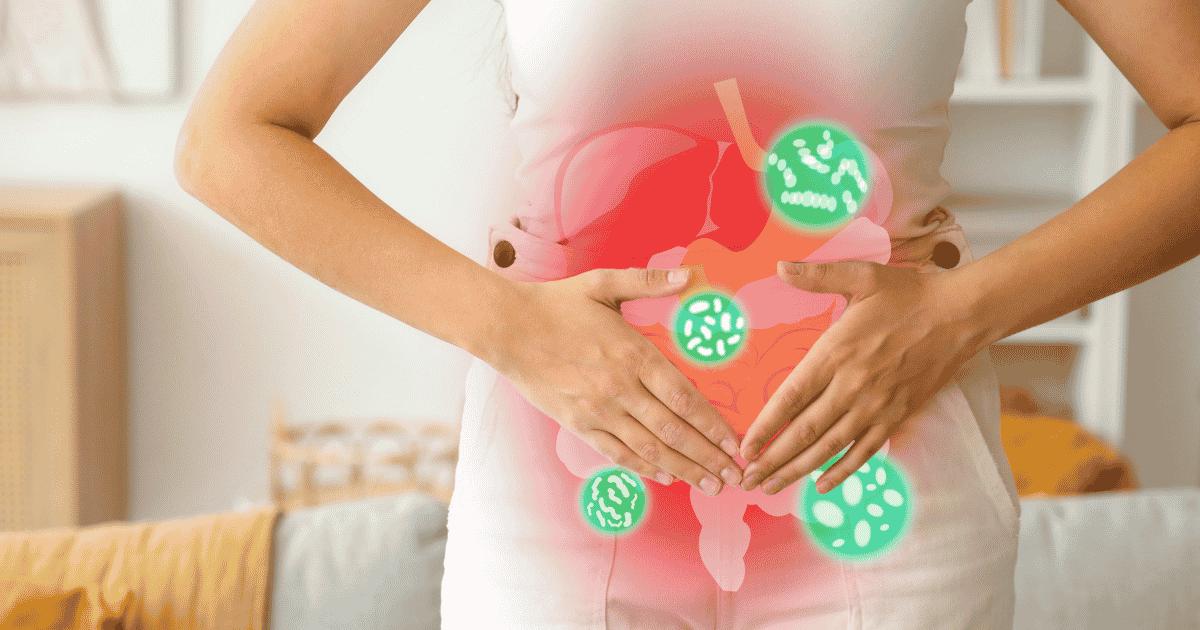
Urolithin A is a compound your gut bacteria make after you eat pomegranates, walnuts, and berries, and it has become one of the most studied ingredients in longevity science. Its main benefits, confirmed in human trials, include stronger muscles, better exercise endurance, lower inflammation, and support for an aging immune system.
Here’s the catch most articles skip. Most people can’t produce much urolithin A from food, no matter how clean they eat. That gap is the whole reason direct supplementation has pulled in so much research.
Key Takeaways

The Short Version
Urolithin A is a gut-derived postbiotic that triggers mitophagy, the cellular process that clears out damaged mitochondria and builds new ones.
In human trials, urolithin A improved muscle strength and endurance and lowered key inflammation markers in adults.
Only about 40 percent of people make meaningful amounts of urolithin A from food, which is why a standardized dose matters.
Clinical studies have used 250 to 1000 mg daily, with the 1000 mg dose tied to the widest range of benefits.
What Is Urolithin A?
Urolithin A is a postbiotic, a compound produced when gut bacteria break down plant polyphenols called ellagitannins. It matters because your body absorbs urolithin A far better than the raw plant compounds it comes from, and because it acts directly on how your cells make energy.
The richest food sources of its precursors are pomegranates, walnuts, raspberries, and strawberries. You can’t absorb ellagitannins straight from those foods. Your gut microbes have to convert them through several steps before urolithin A appears in your bloodstream, a process mapped in research on urolithin metabotypes.
That conversion is where things get interesting, and where most people hit a wall.
How Urolithin A Works: The Mitophagy Connection
Urolithin A works mainly by switching on mitophagy, your cells’ recycling system for worn-out mitochondria. Mitochondria are the structures that turn food into usable energy, and they break down as you age.
Here’s what that recycling step does:
- Tags damaged mitochondria for removal
- Clears them out before they leak inflammatory signals
- Triggers the cell to build fresh, efficient replacements
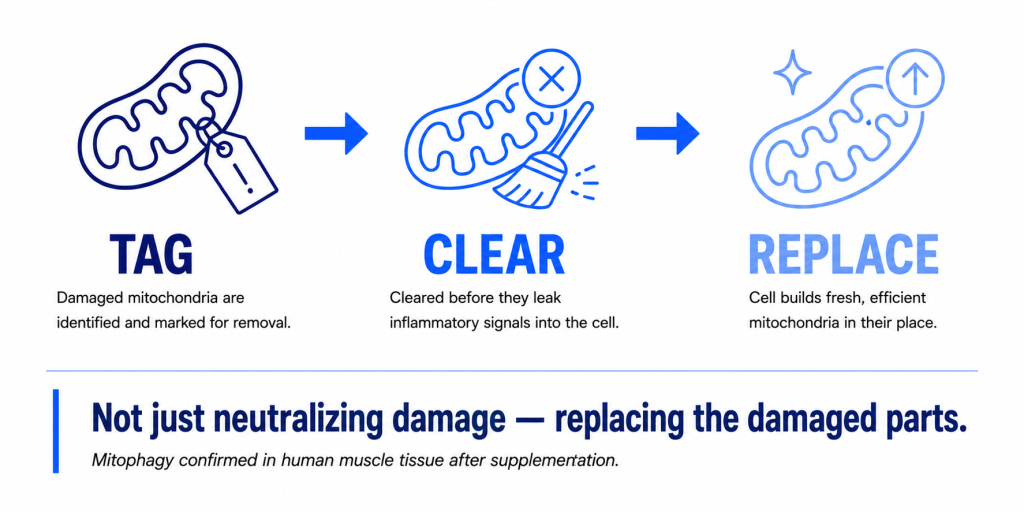
The mechanism was first mapped in worms and rodents, where urolithin A induced mitophagy, improved muscle function, and extended lifespan in simple organisms. Later human work confirmed the same machinery responds in people, with raised expression of mitophagy-related proteins in muscle tissue after supplementation.
This is a step beyond a basic antioxidant. Instead of just neutralizing damage, urolithin A helps replace the damaged parts.
Why Your Body Probably Can’t Make Enough on Its Own
Eating more pomegranates won’t reliably raise your urolithin A, because the conversion depends on having the right gut bacteria. Researchers sort people into urolithin “metabotypes” based on which urolithins their microbiome can produce, and a meaningful share of people produce little to none (Tomás-Barberán 2016).
Roughly 40 percent of people make significant urolithin A from food, and that ability tends to drop with age. Two people can eat the identical diet and end up with completely different urolithin A levels.
That’s the practical case for a supplement. A direct dose skips the bacterial lottery entirely and delivers a known amount, instead of hoping your gut produces it.
Benefits of Urolithin A From Real Studies
The research on urolithin A splits cleanly into two groups: benefits confirmed in human trials, and benefits still being mapped in preclinical work. Here’s where each one stands, starting with the strongest evidence.
1. Stronger Muscles and Better Endurance
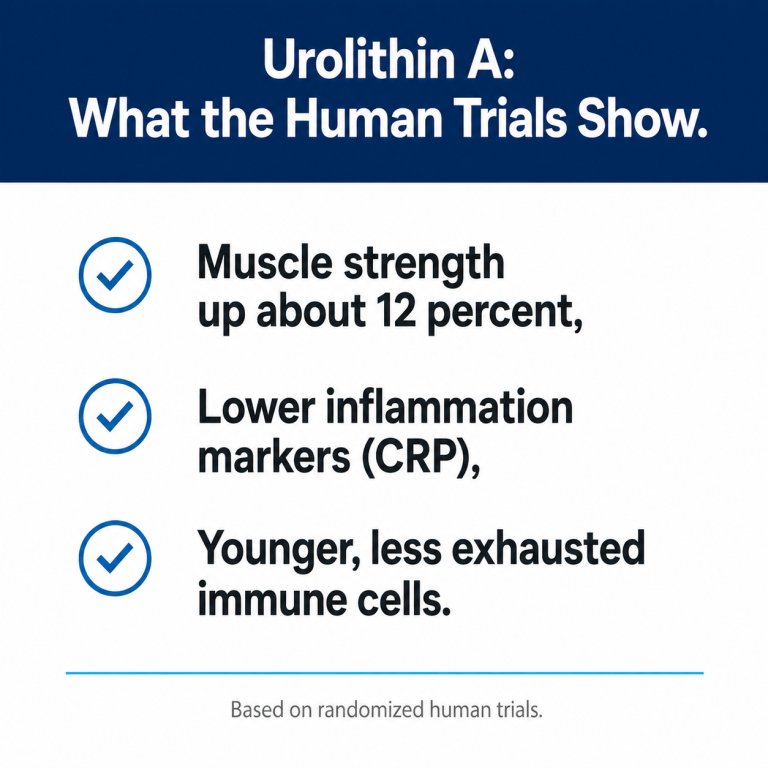
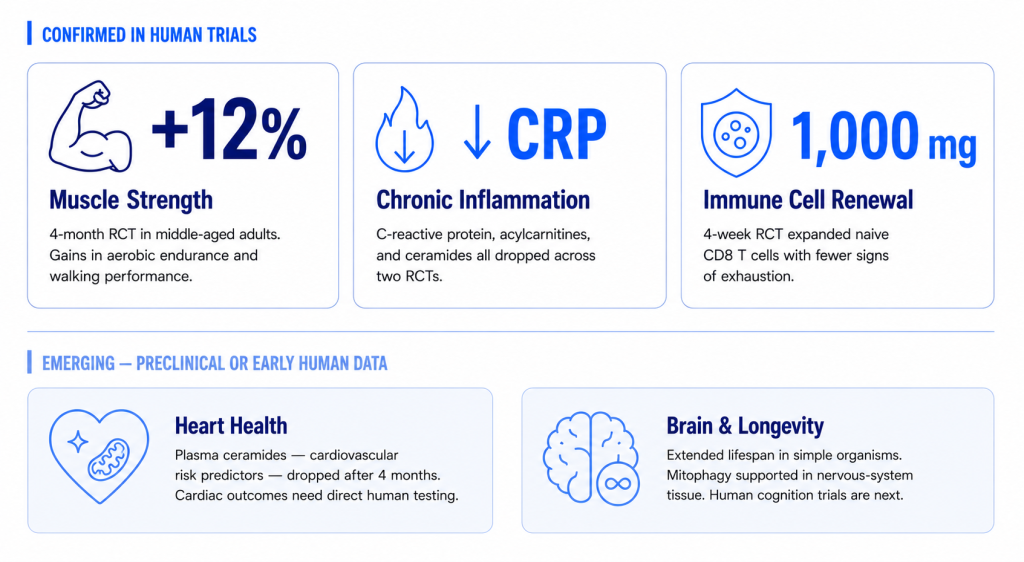
This is the most established benefit. In a randomized controlled trial in middle-aged adults, four months of urolithin A improved muscle strength by about 12 percent, along with gains in aerobic endurance and walking performance (Singh 2022).
A separate randomized trial in adults aged 65 to 90 gave 1000 mg daily and found significant improvements in muscle endurance, measured as the number of contractions before fatigue. Both trials linked the gains to more efficient mitochondria rather than to muscle growth alone.
2. Lower Inflammation
Urolithin A lowered markers of chronic inflammation in both muscle trials. In middle-aged adults, C-reactive protein and plasma acylcarnitines dropped significantly (Singh 2022).
In older adults, supplementation reduced C-reactive protein along with acylcarnitines and ceramides, lipids associated with metabolic stress (Liu 2022). Lower background inflammation is one of the clearer signals across the human data.
3. A Stronger Immune System With Age
A 2025 randomized, placebo-controlled trial tested urolithin A on immune aging directly. Over four weeks, 1000 mg daily expanded naive-like CD8 T cells that showed fewer signs of exhaustion, and it improved the immune cells’ capacity to burn fat for fuel.
These naive-like T cells normally decline as you age, so supporting them is a promising target for healthy immune aging.
4. Heart Health (Emerging)
Urolithin A’s cardiovascular research is early but encouraging. In preclinical models of aging and heart failure, it improved measures of cardiac function and mitochondrial quality.
In people, four months of supplementation significantly lowered plasma ceramides, lipids that have been validated as predictors of cardiovascular risk (Liu 2025). The human cardiac outcomes still need direct testing, and that work is underway.
5. Brain and Longevity (Emerging)
The longevity and brain findings so far come mainly from animal and cell research. Urolithin A extended lifespan in simple organisms and supported mitophagy in nervous-system tissue in preclinical models (Ryu 2016).
These results are a reason to watch this space closely, and human studies on cognition are the next step researchers are pursuing.
How Much Urolithin A Should You Take?
Clinical trials have used 250 to 1000 mg of urolithin A per day. The 250 to 500 mg range supports general mitochondrial and muscle benefits, while 1000 mg daily is the dose linked to the broadest panel of results, including inflammation, endurance, and immune markers (Singh 2022; Liu 2022).
A few practical notes:
- Food doesn’t appear to change absorption, so you can take it with or without a meal.
- Benefits in the trials showed up over two to four months of daily use, not overnight.
- Consistency matters more than timing.
Is Urolithin A Safe?
Urolithin A was well tolerated across the human trials, with no serious adverse events at doses up to 1000 mg daily for four months (Liu 2022). Reported side effects were uncommon and mild, and rates matched placebo in the controlled studies.
At higher doses, some people report mild digestive effects such as bloating or nausea. If you’re pregnant, nursing, taking medication, or managing a medical condition, talk with a qualified clinician before starting, since long-term human safety data currently extends to about four months.
How to Choose a Urolithin A Supplement
The dose is the first thing to check, because most of the benefit data sits at 1000 mg per day. A product that lists a lower or vague amount may not reach the level used in the trials.
Look for these markers of a serious formula:
- A clearly stated urolithin A dose, ideally at the 1000 mg level studied
- Third-party testing and a Certificate of Analysis you can actually see
- A transparent label with no proprietary blends hiding the real amounts
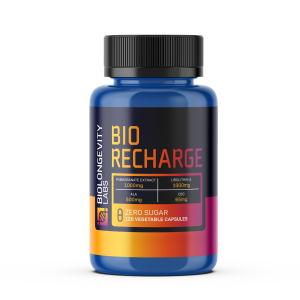
BioRecharge is built around 1000 mg of urolithin A, the dose used in the broader clinical research, and pairs it with pomegranate extract and alpha-lipoic acid for added antioxidant and mitochondrial support. Every batch is third-party tested with documentation available, so you know the amount on the label is the amount in the capsule. If you want a urolithin A supplement that matches the research dose instead of underdelivering, BioRecharge is a clean place to start.
Frequently Asked Questions
Can you get enough urolithin A from food?
Probably not for most people. Foods like pomegranates and walnuts contain the precursors, but only about 40 percent of people have the gut bacteria to convert them into meaningful urolithin A, and that ability declines with age (Tomás-Barberán 2016).
How long does urolithin A take to work?
The human trials measured benefits over two to four months of daily use. Urolithin A is a steady, cumulative ingredient rather than something you feel within hours (Singh 2022; Liu 2022).
Is urolithin A the same as pomegranate extract?
No. Pomegranate extract contains ellagitannins, the precursors. Urolithin A is the active compound your gut bacteria make from those precursors, and supplementing it directly skips the conversion step.
Can you take urolithin A with other supplements?
Generally yes, and it’s often paired with other mitochondrial and antioxidant ingredients. If you take prescription medication or have a health condition, check with a clinician before adding it to your routine.
Does urolithin A actually build muscle?
It improves muscle strength and endurance in human trials, but the mechanism is better mitochondrial efficiency rather than added muscle size (Singh 2022; Liu 2022). Think of it as helping your existing muscle work better.
Ask a qualified clinician before starting any supplement if you are pregnant, nursing, taking medication, or managing a medical condition.
These statements have not been evaluated by the Food and Drug Administration. This product is not intended to diagnose, treat, cure, or prevent any disease.
References
[1] Tomás-Barberán FA, González-Sarrías A, García-Villalba R, et al. Urolithins, the rescue of “old” metabolites to understand a “new” concept: Metabotypes as a nexus among phenolic metabolism, microbiota dysbiosis, and host health status. Mol Nutr Food Res. 2016;61(1). doi:10.1002/mnfr.201500901
[2] Ryu D, Mouchiroud L, Andreux PA, et al. Urolithin A induces mitophagy and prolongs lifespan in C. elegans and increases muscle function in rodents. Nat Med. 2016;22(8):879-888. doi:10.1038/nm.4132
[3] Singh A, D’Amico D, Andreux PA, et al. Urolithin A improves muscle strength, exercise performance, and biomarkers of mitochondrial health in a randomized trial in middle-aged adults. Cell Rep Med. 2022;3(5):100633. doi:10.1016/j.xcrm.2022.100633
[4] Liu S, D’Amico D, Shankland E, et al. Effect of Urolithin A Supplementation on Muscle Endurance and Mitochondrial Health in Older Adults: A Randomized Clinical Trial. JAMA Netw Open. 2022;5(1):e2144279. doi:10.1001/jamanetworkopen.2021.44279
[5] Denk D, Singh A, Kasler HG, et al. Effect of the mitophagy inducer urolithin A on age-related immune decline: a randomized, placebo-controlled trial. Nat Aging. 2025;5(11):2309-2322. doi:10.1038/s43587-025-00996-x
[6] Liu S, Faitg J, Tissot C, et al. Urolithin A provides cardioprotection and mitochondrial quality enhancement preclinically and improves human cardiovascular health biomarkers. iScience. 2025;28(2):111814. doi:10.1016/j.isci.2025.111814