

The Short Version
Key Takeaways

85% of surveyed peptide users report declining trust in traditional healthcare over the past five years, and 76% report low or no trust in the healthcare system overall.
Independent researchers ranked as the most trusted source of health information — ahead of doctors, government agencies, and pharmaceutical companies.
95% of respondents say peptides changed how they think about their health and personal autonomy.
What’s being rejected here is institutional authority, not scientific evidence. This is a critical distinction for anyone trying to understand where health-conscious consumers are headed.
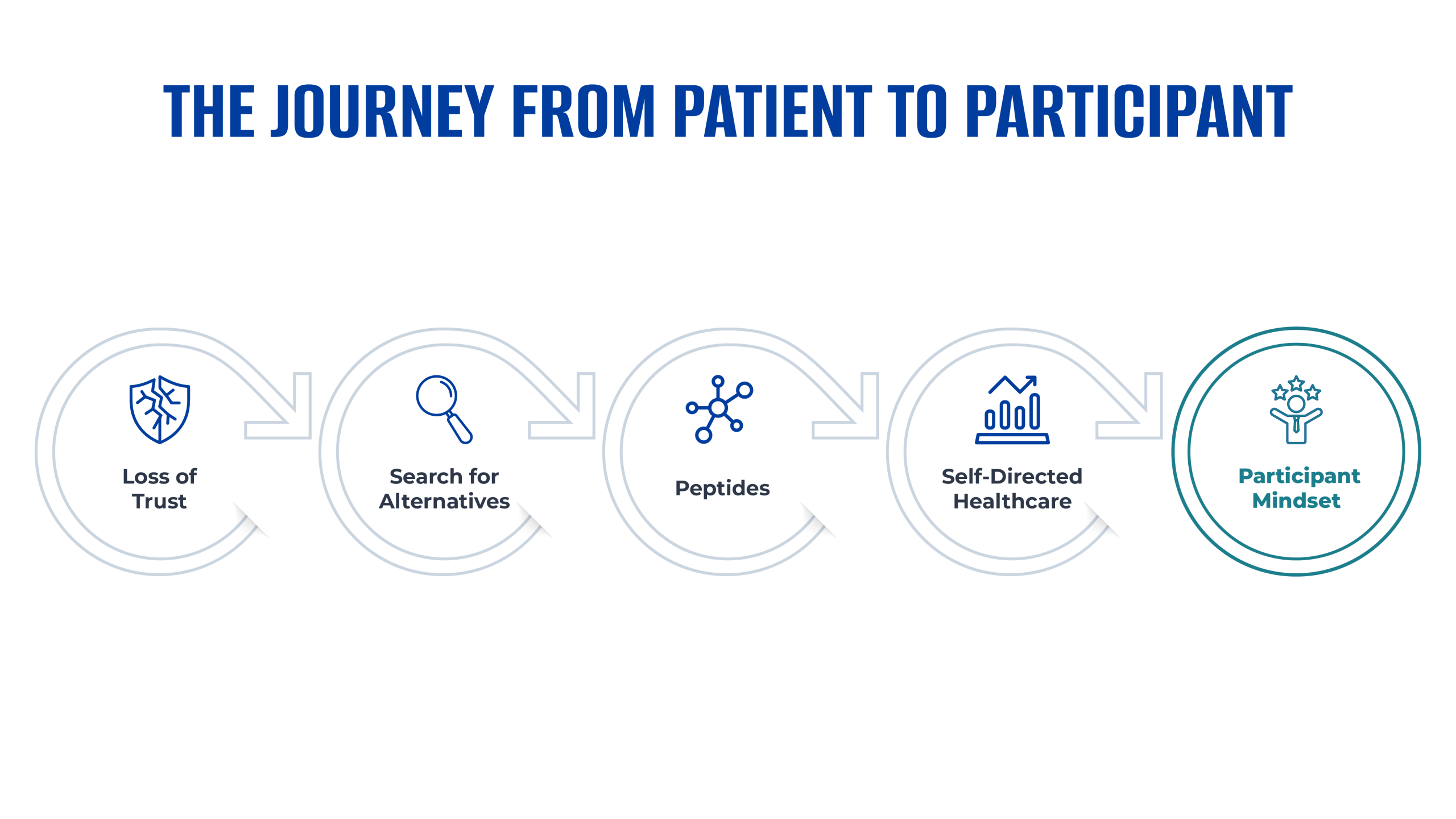
The way people manage their health is changing. A growing number of individuals are no longer waiting for a diagnosis, a referral, or institutional permission to take action. They’re researching their own biology, building their own protocols, and making informed decisions outside the traditional patient-provider relationship.
BioLongevity Supplements surveyed 586 peptide users to understand what’s driving this shift. Our findings suggest that the growing surge of interest in peptides is not a fringe phenomenon. Instead, it’s connected to a broader, data-supported decline in institutional trust and a parallel rise in what we’re calling the participant model of health: one in which individuals take ownership of their own outcomes.
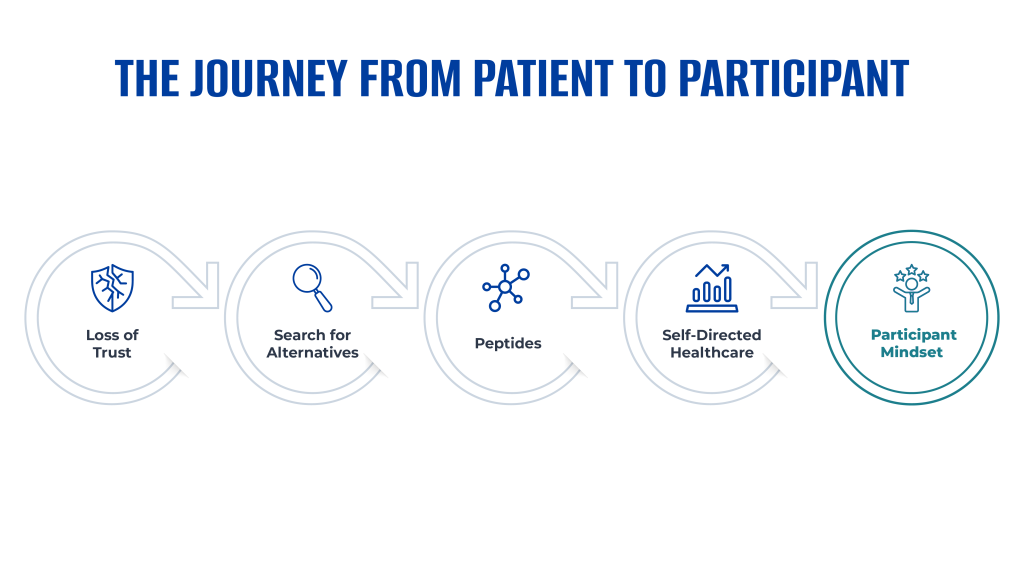
The data points to a population that has stopped waiting for someone to give them answers and actively taking proactive steps to find them.
The Trust Collapse: How Confidence in Healthcare Fell Off a Cliff
Trust in traditional healthcare has fallen sharply in the past five years, and the data from our survey gives further evidence of that trend.
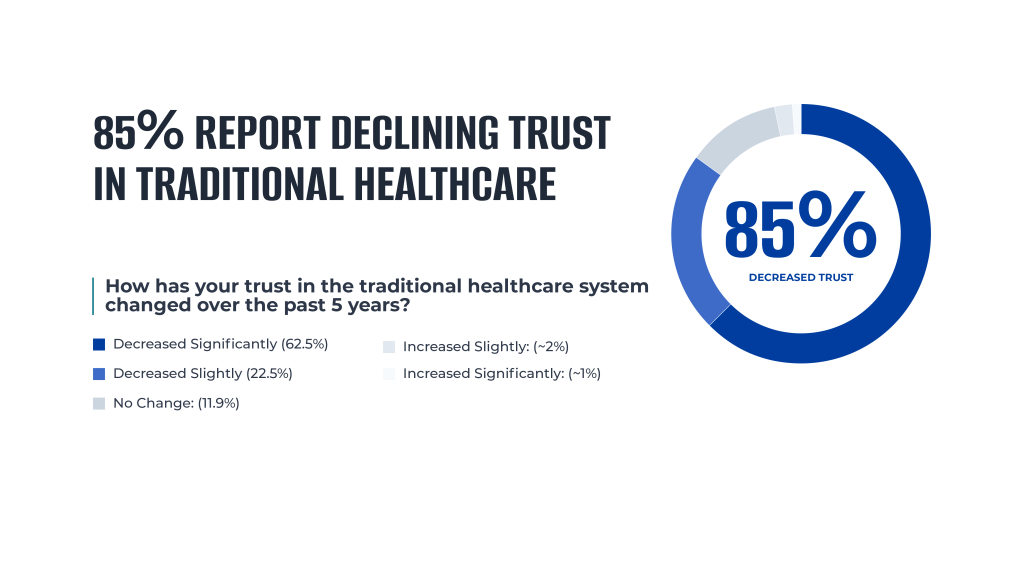
Among the 586 peptide users surveyed by BioLongevity Supplements, 85% reported a slight or significant decrease in trust in traditional healthcare institutions over the past five years. Nearly two-thirds (62.5%) reported trust declined significantly. Only 3% reported any increase.
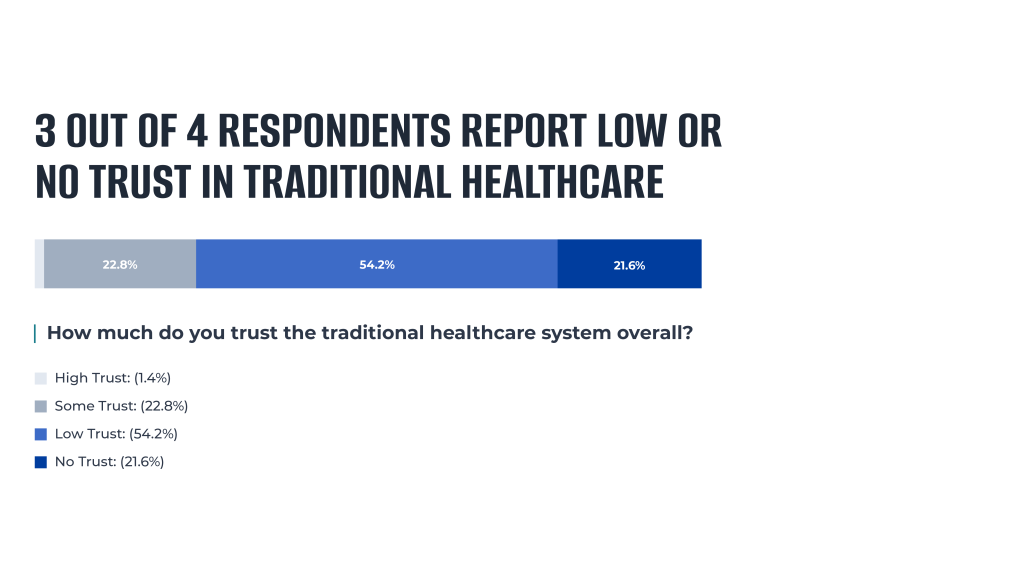
When asked about current overall trust in the healthcare system, just under 76% of respondents said they had low trust or no trust at all — 54.2% low trust and 21.6% no trust. Just 1.4% reported high trust.
Those numbers are congruent with similar findings among the general population. A national survey published in the Journal of American Medical Association of more than 443,000 U.S. adults found that trust in physicians and hospitals fell from 71.5% in April 2020 to 40.1% by January 2024 — a 31-point collapse over four years.
Meanwhile, the 2024 Edelman Trust Barometer reported significant drops across all major health institutions from 2023 to 2024. These figures would have been unthinkable a decade ago.
What’s Behind It?
Survey respondents cited COVID-era policy and media narratives, the discovery of alternative health information, perceived pharmaceutical profit incentives, and a persistent lack of personalized care as the primary drivers of the decline.
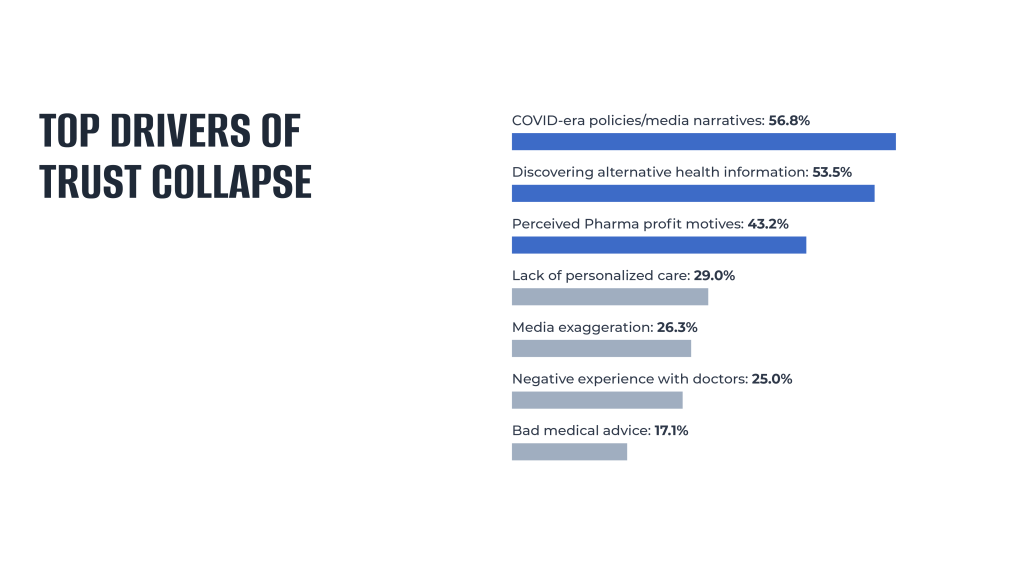
“The COVID era was a turning point for a lot of people in this community,” said Josh Felber, co-founder and CEO of BioLongevity Supplements. “Just from talking to our customers we see a large gap between what institutions are saying and what people are experiencing in their own health journeys, and that’s pushing people to take a more proactive role in their own research.”
What Happens When Trust Breaks Down: The Search for Alternatives
Declining trust doesn’t always produce passivity. It produces curiosity and an enormous appetite for new information sources.
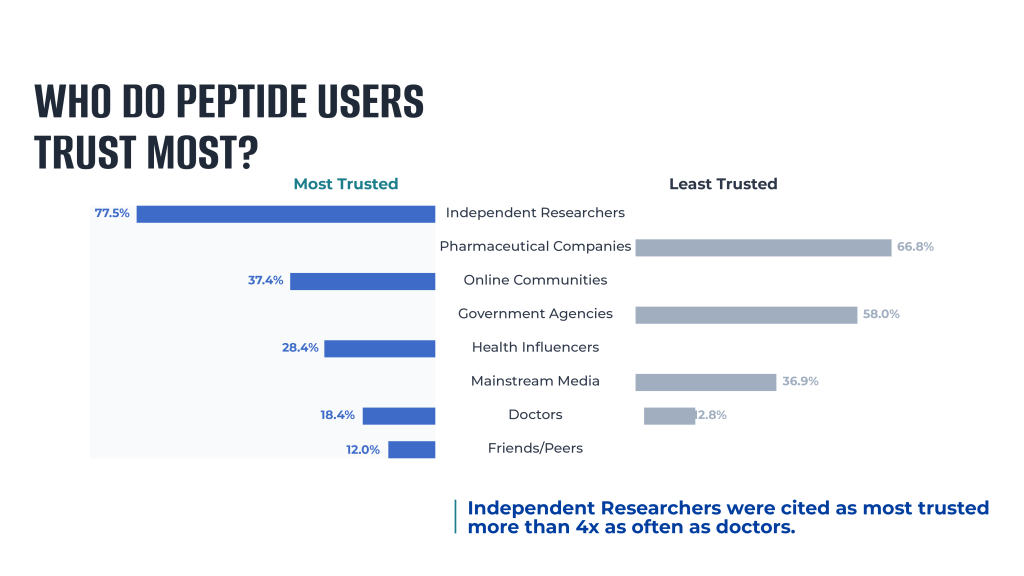
When respondents were asked where they primarily get their health and performance information, independent researchers ranked first at 77.5%. Online communities came in at 37.4%, and health influencers at 28.4%. Doctors came in at 18.4% — barely ahead of the least-trusted institutional sources.
That said, the ranking isn’t a sign that people have abandoned evidence or given up on doctors. It’s a sign that they’re tired of gatekeepers. Those topping the trust hierarchy — researchers, community voices, independent educators — are trusted precisely because they’re seen as operating outside the financial structures that respondents identified as the primary drivers of institutional failure.
That list of least trusted sources makes the broader picture stark. Pharmaceutical companies are the least trusted at 66.8% distrust. Government agencies follow at 58.0% distrust, while mainstream media sits at 36.9% distrust. These figures suggest that there has been a complete inversion of trust in the healthcare industry.
Where Are They Getting Their Information?
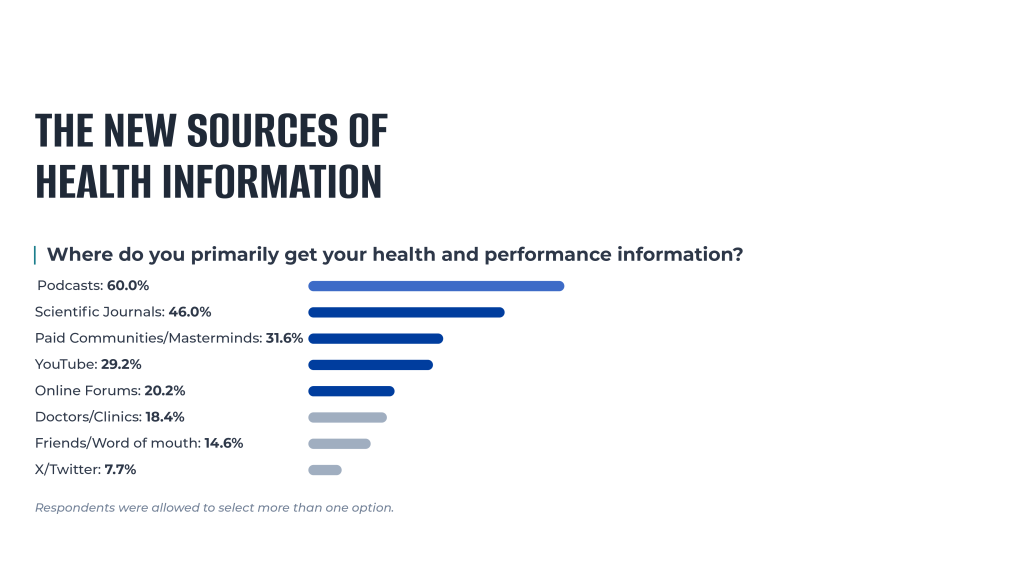
Looking at the list of preferred information sources the same shift becomes apparent. Podcasts lead all sources at 60%, followed by scientific journals at 46%, paid communities at 31.6%, YouTube at 29.2%, online forums at 20.2%, and X/Twitter at 7.7%. Doctors and clinics rank sixth among sources at 18.0% and word of mouth sources rank seventh at just under 15%.
Jeff Cohen, president of the American Peptide Association, has watched this new dynamic play out in the regulatory space for several years.
“The shift toward peer-based information is reshaping what consumers demand from supplement and peptide companies, including what transparency, regulatory clarity, and education mean in a market where institutional trust is low and people are doing their own due diligence,” he said.
Why Peptides Became the Gateway Into Self-Directed Health
Peptides didn’t become popular because they’re easy to understand. They became popular precisely because they demand the kind of active engagement that defines the participant mindset.
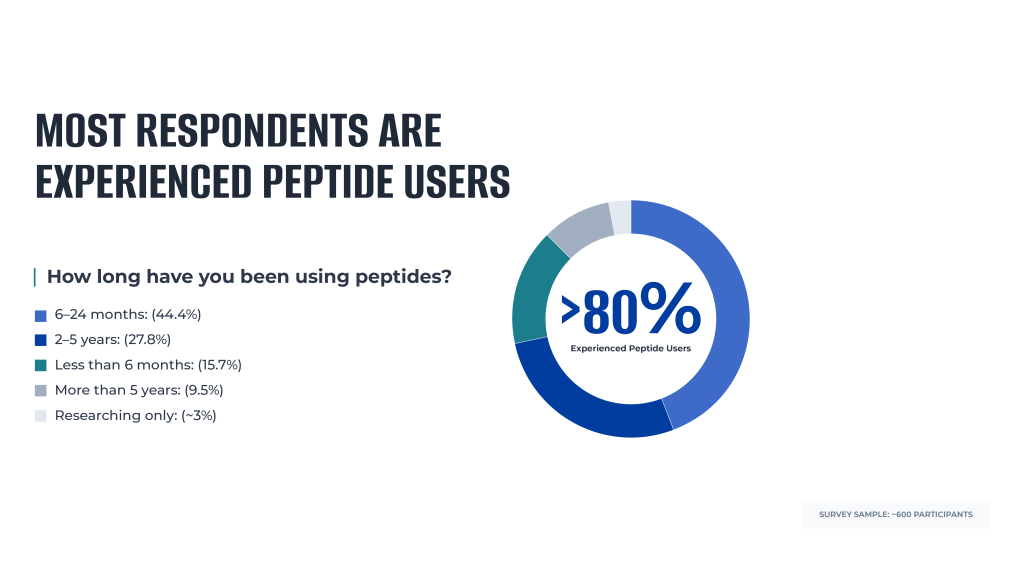
The survey base reflects that depth of engagement. Over 80% of respondents have been using peptides for more than six months — 44.4% for six to 24 months, 27.8% for two to five years, and 9.5% for more than five years. Fewer than 3% were researchers only with no personal use experience.
Peptides sit at the intersection of science, self-experimentation, and personal agency. Using peptides effectively requires a not insignificant amount of research. It means developing a working understanding of signaling pathways, dosing windows, and organ-system specificity, and engaging with communities of people running their own experiments and sharing results.
That process — the research, the iteration, the biomarker tracking — tends to change how a person thinks about their body. For most survey respondents, peptides were the entry point into a different framework for health decision-making.
Jay Campbell, co-founder and chief strategy officer at BioLongevity Supplements, has spent years at the center of this community:
“The peptide community operates like an accelerated education pathway, and the people who get into peptides tend to become more sophisticated health consumers overall,” he said. “When your customer already knows more about these compounds than most practitioners, you have a pretty high bar to meet as a provider.”
They attract people who are willing to put in the work to understand the body’s mechanisms. And once someone has learned to understand peptide bioregulators, organ-system targeting, or mitochondrial support compounds, they don’t go back to blindly trusting advice they can’t evaluate.
The Rise of Self-Directed Healthcare: Who’s Actually Running the Protocol?
The majority of respondents no longer view themselves as passive recipients of healthcare. They are active managers of it.
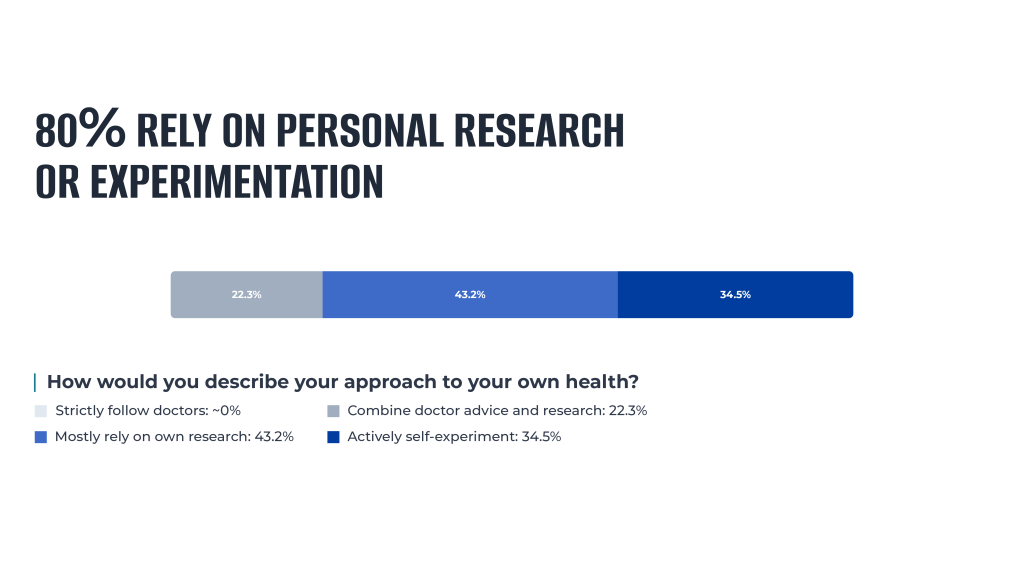
Nearly eight in 10 primarily rely on personal research or experimentation. Forty-three percent say they mostly rely on their own research, and 34.5% describe themselves as active self-experimenters. Just 22.3% combine doctor advice with personal research, and essentially no one reported strictly following doctor guidance alone.
Most respondents still work with healthcare providers, but the relationship has changed. The practitioner is increasingly a consultant, and respondents arrive at appointments with protocol hypotheses and informed questions, not blank slates.
That shift has real implications for how health product providers need to communicate. Customers in this category are more sophisticated consumers who seek to be educated and verified. They want to know what’s in the formula, why those compounds were selected, what the evidence base looks like, and whether the product has been tested by someone other than the company that made it.
“Building a supplement brand for customers who arrive already knowing more than the average person means you have to come with receipts on everything you say,” said Felber. “That’s why BioLongevity Supplements is committed to third-party testing and Certificates of Analysis for all of our offerings.”
From Patient to Participant: The Shift That’s Bigger Than Any Supplement
The most striking finding in the survey isn’t the trust numbers. It’s what happened after trust collapsed.
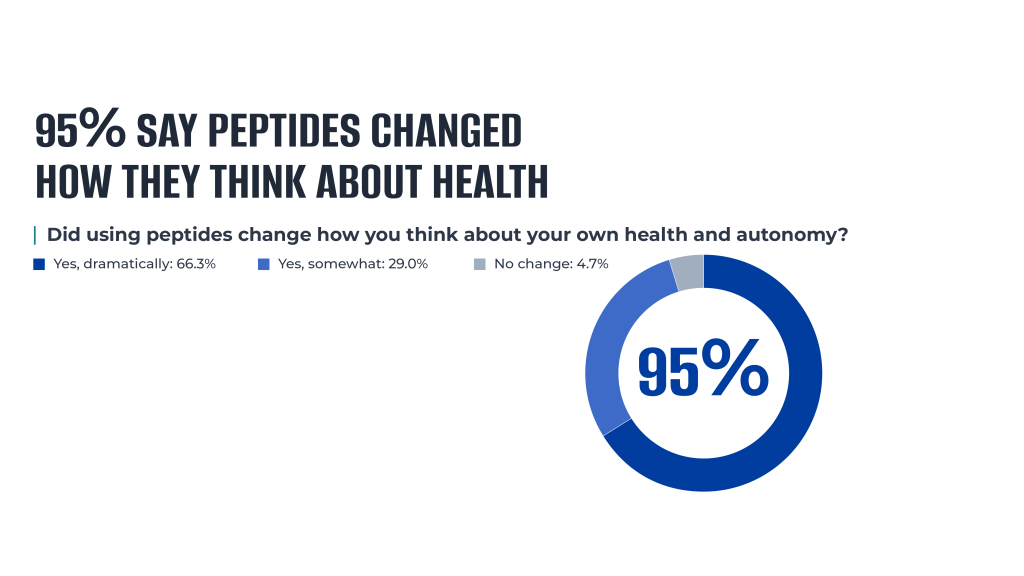
Ninety-five percent of respondents say that using peptides changed how they think about their health and personal autonomy — 66.3% say the change was dramatic, 29% say it was meaningful. Only 4.7% reported no change in their thinking.
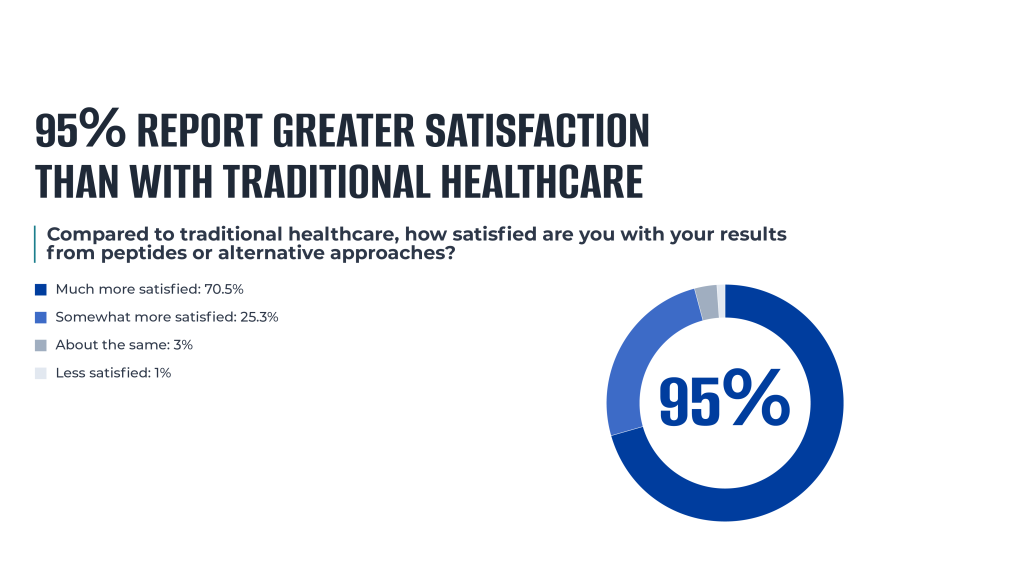
At the same time, 95.8% report equal or better outcomes using peptides or alternative approaches compared to traditional healthcare. Seventy percent said they were much more satisfied; 25.3% somewhat more satisfied. Just 1% reported being less satisfied.
Those numbers suggest a community that found a framework that works for them — one built on personal agency, continuous learning, and a demand for transparency — and isn’t going back.
The word that best captures this transformation isn’t “patient.” A patient waits, receives, is managed.
The people in this survey are participants. They design their protocols. They track their biomarkers. They evaluate the evidence. They share results and iterate. The healthcare system is one input among many, and not always the most trusted one.
Cohen puts the regulatory dimension of this shift in context:
“The participant mindset is creating new pressure on regulators and industry alike, with higher demand for access to advanced compounds, a push for better safety frameworks, and what the American Peptide Association is working toward to support both consumer autonomy and responsible oversight in the peptide and supplement space.”
A New Model Is Taking Shape
The shift apparent in these survey results points beyond a rejection of traditional medicine. Something more structured is emerging: a model of health management that positions the individual as the primary decision-maker, with doctors, data, and community as inputs rather than authorities.
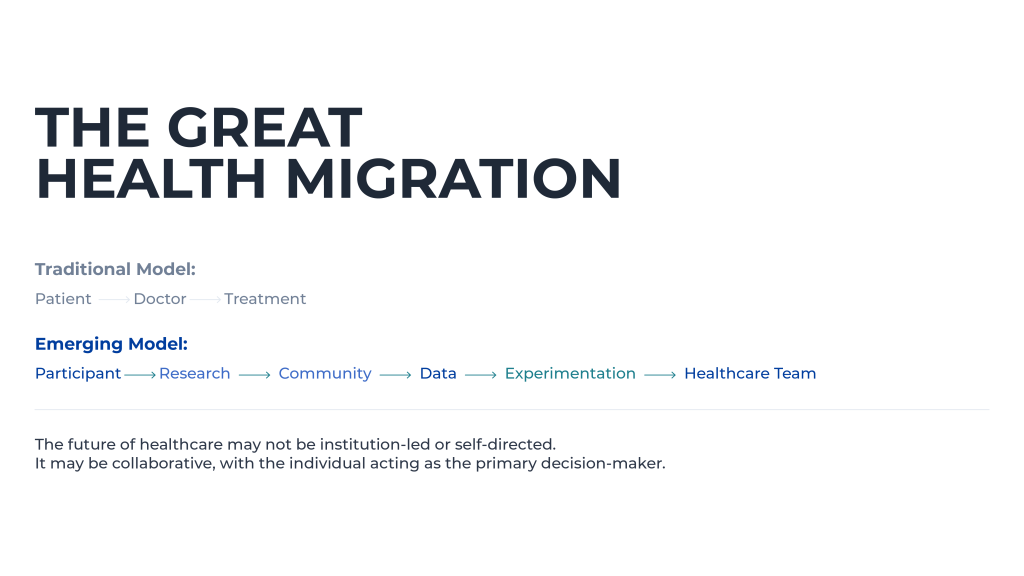
The traditional model runs in a straight line: Patient → Doctor → Treatment. The individual arrives, defers, and receives.
The emerging model looks different: Participant → Research → Community → Data → Experimentation → Healthcare Team. The individual leads, and practitioners are one node in a larger decision-making network.
The future of healthcare may not be purely institution-led or purely self-directed. It may be collaborative, with the individual acting as the primary decision-maker and the healthcare system functioning as a resource rather than a gatekeeper.
What This Means for Supplement Companies — and Anyone Selling to This Audience
The implications of these survey results extend well beyond peptides.
The companies that earn trust here will be transparent by default — third-party tested, clearly sourced, honest about what the evidence shows and where it falls short.
“The people in this community have done the work. They’ve read the studies, they’ve tracked their own data, they’ve experimented on themselves,” said Campbell. “You can’t sell that person with a flashy label and a vague promise. Either your formula holds up to scrutiny or it doesn’t. Either you can show them the COA or you can’t. That’s the bar now, and honestly, it should have always been the bar.”
BioLongevity Supplements was built for the participant. From peptide bioregulators and targeted capsule formulas to topical wellness compounds and more, every product in the catalog is designed to be understood, evaluated, and incorporated into an intelligent protocol.
Survey Methodology
BioLongevity Supplements surveyed 586 self-identified peptide users over one week in May 2026. Respondents were recruited through online communities, social media channels, and the BioLongevity audience network. Participation was voluntary and anonymous. The survey was conducted online and covered healthcare trust, information sourcing habits, peptide use history, and self-directed health behaviors.
At a sample size of 586, the margin of error is ±4.1 percentage points at a 95% confidence level.
Results reflect the perspectives of an engaged, health-active population and are not representative of the general U.S. adult population. Percentages are rounded to the nearest tenth. Some questions allowed multiple responses, so totals may exceed 100%.
Frequently Asked Questions
Who participated in the BioLongevity survey?
The survey included 586 respondents who self-identified as peptide users. The majority represented an experienced user base rather than newcomers, and the results reflect the perspectives of people who have been actively managing their own health outside traditional frameworks for a meaningful period of time.
Does this survey represent the general public?
No. This survey was designed to capture the perspectives of a specific, health-engaged community of peptide users. It doesn’t represent average American healthcare behavior. What it does represent is a leading-edge segment — people whose attitudes and behaviors often prefigure broader population shifts.
Is self-directed healthcare the same as rejecting medicine?
No. Most respondents in this survey still engage with healthcare providers, but they arrive as informed participants rather than passive patients. They’re more likely to question, verify, and integrate physician input alongside other sources. They’re not ignoring medical advice, they’re evaluating it on the same terms they evaluate everything else.
Why do peptide users trust independent researchers more than doctors?
Survey data suggests it’s less about distrust of individual doctors and more about distrust of the systems and incentives surrounding institutional healthcare. Independent researchers and online communities are seen as operating outside those incentive structures. They’re also frequently more current on emerging research in the areas that peptide users care about most.
What does this mean for how I should choose a supplement company?
Look for transparency you can actually verify. That means third-party testing with Certificates of Analysis available, clear disclosure of ingredients, amounts, and forms, and educational content that explains the science without overpromising the outcome. Companies building for the participant mindset will meet that standard. Companies still operating in the old patient model won’t.
Build a Protocol That Meets Your Standard
If you’ve done the research and you’re looking for formulas built to match it, BioLongevity Supplements offers third-party tested peptide bioregulators, targeted capsule formulas, and topical compounds — each with Certificates of Analysis and transparent ingredient documentation. Explore the catalog and build the routine that fits where you are.
Ask a qualified clinician before starting any supplement if you are pregnant, nursing, taking medication, or managing a medical condition.
These statements have not been evaluated by the Food and Drug Administration. This product is not intended to diagnose, treat, cure, or prevent any disease.
External References
[1] BioLongevity Supplements. Survey of 586 Peptide Users on Healthcare Trust, Autonomy, and Self-Directed Health Management. 2026. Internal research data.
[2] Trust in Physicians and Hospitals During the COVID-19 Pandemic. JAMA Network Open. 2024. Referenced via: https://pubmed.ncbi.nlm.nih.gov/39083270/
[3] Edelman. 2024 Edelman Trust Barometer Special Report: Trust and Health. 2024. https://www.edelman.com/trust/2024/trust-barometer/special-report-health
[4] KFF. KFF Tracking Poll on Health Information and Trust: January 2025. 2025. kff.org/health-information-trust/kff-tracking-poll-on-health-information-and-trust-january-2025/
[5] AAMC Center for Health Justice. Trust Trends: U.S. Adults’ Gradually Declining Trust in Institutions, 2021–2024. 2024. aamchealthjustice.org/news/polling/trust-trends
[6] El-Osta A. Navigating health autonomy through self-care. Open Access Government. April 2024. openaccessgovernment.org/article/navigating-health-autonomy-through-self-care/174555/