



Two enzymes get compared constantly in cardiovascular supplement circles: nattokinase and lumbrokinase. Both break down fibrin. Both get marketed for circulation support. And one of them has a clinical evidence base that dwarfs the other by almost every measure.
That’s what this article is about. Not which enzyme sounds more impressive — which one the research actually supports, what each one does in the body, and what you should actually look for when choosing a fibrinolytic supplement.
Key Takeaways

The Short Version
A tributyrin supplement is a stable, fat-based form of butyrate designed to deliver more of it to the colon than standard butyrate.
Butyrate is the primary energy source for the cells that line the colon, which is why colon delivery matters more than blood levels.
Most current evidence comes from lab and animal studies, with early human data on oral tributyrin still emerging.
Look for the clinically studied CoreBiome form, a clear dose, third-party testing, and a Certificate of Analysis.
What Are Fibrinolytic Enzymes?
Fibrin is a protein your body produces to form blood clots. In the right context, that’s essential — it’s how wounds seal. The problem is that fibrin can also accumulate in blood vessels, contributing to sluggish circulation and increased clotting risk over time.
Fibrinolytic enzymes break fibrin down. Your body makes its own fibrinolytic proteins, primarily plasmin, but their activity declines with age, sedentary behavior, and certain metabolic conditions. Supplemental fibrinolytic enzymes have been studied as a way to support that process review published in Int J Mol Sci.
Nattokinase and lumbrokinase are the two most discussed options in this category. They share the same general function — fibrin breakdown — but differ in source, mechanism, and the depth of evidence behind them.
What Is Nattokinase?
Nattokinase is a serine protease produced by the bacterium Bacillus subtilis natto during the fermentation of soybeans into natto, a traditional Japanese food consumed for over a thousand years review published in Int J Mol Sci. It was first isolated in 1987 and has since become one of the most studied natural fibrinolytic enzymes.
As a single, well-characterized enzyme, nattokinase has a defined molecular structure and standardized activity measurement — fibrinolytic units (FU). This matters practically: a product labeled 2,000 FU from one manufacturer means the same thing as 2,000 FU from another, assuming the assay method is consistent.
Human pharmacokinetic research has confirmed that nattokinase is detectable in blood following a single oral dose, with peak serum levels observed at roughly 13 hours post-ingestion a human pharmacokinetic study. That’s foundational — it confirms the enzyme survives digestion and enters circulation, which is not guaranteed for proteins taken orally.
What Is Lumbrokinase?
Lumbrokinase is derived from earthworms, most commonly Lumbricus rubellus. It has been used in traditional Chinese medicine for centuries and has attracted research interest as a natural fibrinolytic agent.
One important distinction: lumbrokinase is not a single enzyme. It is a collective term for a group of six proteolytic enzymes extracted from earthworm tissue a 2009 pilot study. That structural complexity is relevant because it makes standardization harder — the activity profile of lumbrokinase can differ depending on species, extraction method, and manufacturer.
Lumbrokinase unit (LKU) measurements are not universally standardized across the supplement industry. Two products with the same LKU count may not have the same fibrinolytic activity. This is a practical problem that most comparison articles gloss over, and it matters significantly when trying to evaluate dose or replicate study conditions.
Nattokinase vs. Lumbrokinase: Quick Comparison
| Factor | Nattokinase | Lumbrokinase |
|---|---|---|
| Source | Fermented soybeans (B. subtilis natto) | Earthworm (Lumbricus rubellus) |
| Enzyme type | Single serine protease | Six-enzyme proteolytic complex |
| Standardization | FU (fibrinolytic units) — consistent | LKU — not standardized across manufacturers |
| Human RCT data | Multiple trials, 2023 meta-analysis | One 10-patient uncontrolled pilot study |
| Blood pressure evidence | Supported in RCTs | Not established in humans |
| Oral bioavailability | Confirmed in human PK study | Not published |
| Soy allergy consideration | Contains soy | Soy-free |
| Bleeding risk | Present — use caution with anticoagulants | Present — use caution with anticoagulants |
The Evidence Gap Nobody Talks About
Most nattokinase vs. lumbrokinase comparisons present the two as roughly equal options with different strengths. That framing is misleading.
The clinical evidence base for these two enzymes is not close.
Nattokinase has been evaluated in a large, three-year, double-blind, placebo-controlled randomized trial with 265 participants a three-year randomized controlled trial. It has been studied in a 2023 systematic review and meta-analysis that pooled six randomized controlled trials covering 546 participants a 2023 systematic review and meta-analysis. It has standalone RCT data on blood pressure and hemostatic markers an RCT in hypercholesterolemic subjects, a North American double-blind RCT. Researchers can point to human pharmacokinetic data confirming oral bioavailability a human pharmacokinetic study.
Lumbrokinase has one published clinical study in humans: a single-arm pilot with 10 patients a 2009 pilot study. It has animal model data animal model research. It has no published RCT.
The claim that lumbrokinase is “30 times more effective” than nattokinase — which circulates widely in supplement marketing and functional medicine communities — has no peer-reviewed citation. There is no published head-to-head human study. The comparison cannot be made honestly from current evidence.
That is not a dismissal of lumbrokinase. It may well have meaningful clinical applications as the research matures. It is a plain statement of where the science stands.
Nattokinase Human Data: What We Actually Know
A 2023 systematic review and meta-analysis published in Reviews in Cardiovascular Medicine analyzed six RCTs with 546 total participants and found that nattokinase supplementation significantly reduced both systolic and diastolic blood pressure compared to placebo a 2023 systematic review and meta-analysis.
The effect on lipid markers was dose-dependent and mixed, with some doses showing neutral effects on cholesterol — an important nuance for consumers expecting a universal lipid benefit.
A North American double-blind RCT found that 100 mg of nattokinase daily for eight weeks was associated with statistically significant reductions in diastolic blood pressure, with stronger effects observed in male participants, as well as reductions in von Willebrand factor, a cardiovascular risk marker a North American double-blind RCT.
A separate RCT in hypercholesterolemic subjects showed that nattokinase supplementation over eight weeks produced significant improvements in hemostatic markers, including collagen-epinephrine closure time and activated partial thromboplastin time an RCT in hypercholesterolemic subjects.
The largest and most rigorous trial — a three-year double-blind RCT at the University of Southern California with 265 participants — found no significant effect on carotid intima-media thickness or arterial stiffness in a low-risk, healthy population a three-year randomized controlled trial. This result is worth including honestly. It suggests nattokinase’s cardiovascular benefits may be more relevant for people with specific risk factors than for the general healthy population.
Lumbrokinase Human Data: What We Actually Know
The only published human study on lumbrokinase is a 2009 single-arm pilot involving 10 patients with stable angina a 2009 pilot study. Participants received oral lumbrokinase for 30 days alongside their existing standard-of-care medications. Myocardial perfusion imaging scores improved in the majority of patients, and no adverse events were observed. The authors called it the first description of oral lumbrokinase use in chronic coronary artery disease.
A 10-patient uncontrolled pilot with no placebo comparison cannot establish efficacy. The results are hypothesis-generating, not confirmatory.
Animal model research has explored lumbrokinase’s effects on cardiac fibrosis animal model research, but animal data does not predict human outcomes and should not be cited to support product claims.
How They Work Differently in the Body
Nattokinase works primarily through direct fibrinolysis — it cleaves fibrin and fibrinogen directly — and may also modulate the renin-angiotensin system, which could explain its blood pressure effects independent of fibrinolytic activity review published in Int J Mol Sci. Human pharmacokinetic data shows peak serum levels at approximately 13 hours after a single 2,000 FU oral dose a human pharmacokinetic study.
Lumbrokinase exerts fibrinolytic and broader proteolytic activity through its six-enzyme complex, though the precise human pharmacokinetic profile has not been published. The lack of bioavailability data for lumbrokinase makes it harder to assess what dose reaches systemic circulation or how long it remains active.
This is not a trivial distinction. Oral enzymes face a significant barrier: proteolytic degradation in the stomach and small intestine. Nattokinase’s survival across that barrier is documented in humans. For lumbrokinase, it has not been formally established.
Safety, Bleeding Risk, and Medication Interactions
Both enzymes affect blood coagulation, which means both carry bleeding risk — particularly relevant for anyone taking anticoagulants (warfarin, heparin), antiplatelet drugs (aspirin, clopidogrel), or other blood-thinning medications.
The large Hodis RCT reported no notable adverse events from nattokinase over three years a three-year randomized controlled trial. The lumbrokinase pilot also reported no adverse events, but a 10-patient cohort is far too small to assess safety systematically a 2009 pilot study.
If you are pregnant, nursing, taking blood-thinning medications, or managing a cardiovascular condition, consult a qualified healthcare provider before using either supplement.
Who Should Consider Which?
Neither enzyme is a pharmaceutical intervention, and the framing of this section is practical, not prescriptive.
Nattokinase has the deeper evidence base and is a more defensible choice for daily cardiovascular support. It has documented effects on blood pressure in hypertensive populations, established oral bioavailability in humans, and a well-characterized standardized dose. It pairs naturally with other cardiovascular-support compounds — K2, CoQ10, bergamot — in a multi-pathway formula approach.
Lumbrokinase is an option for those who want to avoid soy or who are interested in combining fibrinolytic enzyme approaches. Some clinicians combine both, reasoning that the enzyme profiles are distinct enough to be complementary. However, that practice has not been evaluated in controlled trials, and dosing for lumbrokinase remains undefined.
Anyone with a soy allergy should note that nattokinase is soy-derived, though the protein fraction responsible for allergic reactions is generally removed during the fermentation and extraction process. If soy sensitivity is a concern, discuss with your provider.
What to Look for in a Fibrinolytic Enzyme Supplement
Whether you’re evaluating nattokinase or lumbrokinase, the label tells you a lot about whether a product is worth considering.
For nattokinase:
- Look for FU (fibrinolytic units) clearly stated — 2,000 FU per serving is the dose used in most human trials
- Confirm standardization (e.g., 20,000 FU/g with a stated yield of FU per serving)
- Verify third-party testing and a Certificate of Analysis for purity and potency
- Check that the product is manufactured in a cGMP-certified facility
For lumbrokinase:
- Understand that LKU units are not standardized across manufacturers — the number alone is not enough to assess potency
- Look for evidence of testing documentation and stated extraction source
- Be cautious of potency claims that cite no clinical reference
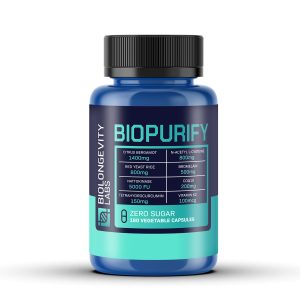
Nattokinase is included in BioPurify, BioLongevity’s eight-compound cardiovascular formula, at 250 mg standardized to 20,000 FU/g — a dose and standardization consistent with the research record.
Frequently Asked Questions
Can you take nattokinase and lumbrokinase together?
Some practitioners combine both, reasoning that their distinct enzyme profiles may be complementary. No published clinical study has evaluated this combination, so there is no established dosing or safety data for combined use. Discuss with your healthcare provider before stacking fibrinolytic enzymes.
Is lumbrokinase stronger than nattokinase?
The “30x stronger” claim appears frequently but has no published peer-reviewed citation. There is no head-to-head human study. Lumbrokinase may have potent fibrinolytic activity in vitro, but those results do not translate directly to human outcomes.
How long does nattokinase take to work?
Nattokinase is detectable in blood within hours of a single dose, with peak serum levels around 13 hours post-ingestion a human pharmacokinetic study. Blood pressure and hemostatic effects have been observed in RCTs at 8 weeks, with longer studies tracking cardiovascular markers over months to years a three-year randomized controlled trial.
Can I take nattokinase with blood thinners?
Nattokinase affects blood coagulation and should not be combined with anticoagulant or antiplatelet medications without medical supervision. Discuss any fibrinolytic supplement with your prescribing physician before use.
What dose of nattokinase is most researched?
The most commonly studied dose across human trials is 2,000 FU per day. Some trials have used higher doses; the meta-analysis noted that effects on lipid markers may be dose-dependent a 2023 systematic review and meta-analysis.
Final Takeaway
Nattokinase and lumbrokinase target the same system, but their evidence profiles are not comparable. Nattokinase has been evaluated in multiple randomized controlled trials, a large-scale 3-year study, and a 2023 meta-analysis. Lumbrokinase has a promising mechanism and traditional use history, but its human clinical record is a single 10-patient pilot with no control group.
That does not make lumbrokinase worthless. It makes it a compound to watch as research develops — not one to rank above nattokinase based on claims without citations.
For consumers who want a fibrinolytic enzyme with the strongest available evidence behind it, nattokinase is the clearer choice today. Look for standardized FU dosing, transparent testing, and a formula built around clinical research — not marketing math.
Ready to explore a cardiovascular formula built around nattokinase and seven other evidence-backed compounds? Explore BioPurify.
Ask a qualified clinician before starting any supplement if you are pregnant, nursing, taking medication, or managing a medical condition. This article is educational and does not replace medical advice.
These statements have not been evaluated by the Food and Drug Administration. This product is not intended to diagnose, treat, cure, or prevent any disease.
References
- Weng Y, et al. Nattokinase: An Oral Antithrombotic Agent for the Prevention of Cardiovascular Disease. Int J Mol Sci. 2017;18(3):523. doi:10.3390/ijms18030523
- Hodis HN, et al. Nattokinase atherothrombotic prevention study: A randomized controlled trial. Clin Hemorheol Microcirc. 2021;78(4):339–353. doi:10.3233/CH-211147
- Ero MP, et al. A pilot study on the serum pharmacokinetics of nattokinase in humans following a single, oral, daily dose. Altern Ther Health Med. 2013;19(3):16–19. PMID: 23709455
- Li X, et al. Nattokinase Supplementation and Cardiovascular Risk Factors: A Systematic Review and Meta-Analysis of Randomized Controlled Trials. Rev Cardiovasc Med. 2023;24(8):234. doi:10.31083/j.rcm2408234
- Yoo HJ, et al. The effects of nattokinase supplementation on collagen-epinephrine closure time, prothrombin time and activated partial thromboplastin time in nondiabetic and hypercholesterolemic subjects. Food Funct. 2019;10(5):2888–2893. doi:10.1039/c8fo02324g
- Lai CH, et al. Lumbrokinase from earthworm extract ameliorates second-hand smoke-induced cardiac fibrosis. Environ Toxicol. 2014;30(10):1216–1225. doi:10.1002/tox.21993
- Kasim M, et al. Improved myocardial perfusion in stable angina pectoris by oral lumbrokinase: a pilot study. J Altern Complement Med. 2009;15(5):539–544. doi:10.1089/acm.2008.0506
- Jensen GS, et al. Consumption of nattokinase is associated with reduced blood pressure and von Willebrand factor: results from a randomized, double-blind, placebo-controlled, multicenter North American clinical trial. Integr Blood Press Control. 2016;9:95–104. doi:10.2147/IBPC.S99553