


KPV is a three-amino-acid peptide (lysine-proline-valine) studied mainly for its anti-inflammatory activity in the gut. It matters because it’s one of the few peptides that appears to work when taken orally, which is unusual for a molecule this small.
Most of what we know about KPV comes from animal and cell research, not human trials. That distinction shapes everything below, so we’ll keep the evidence labels clear as we go.
Key Takeaways

The Short Version
KPV is the tail-end fragment of alpha-MSH, a natural hormone, and it carries the anti-inflammatory activity without causing skin tanning.
In animal and cell studies, KPV calms inflammation by quieting NF-kB, a master switch that drives inflammatory genes.
A gut transporter called PepT1 pulls KPV into inflamed intestinal tissue, which is why oral dosing is the route most studied for gut support.
There are no large human trials yet, KPV is sold as a research compound, and long-term safety in people is unknown.
What Is KPV Peptide?
KPV is a tripeptide made of three amino acids: lysine, proline, and valine. It’s the C-terminal fragment of alpha-melanocyte-stimulating hormone (alpha-MSH), a hormone your body already makes that helps regulate inflammation (Brzoska 2008).
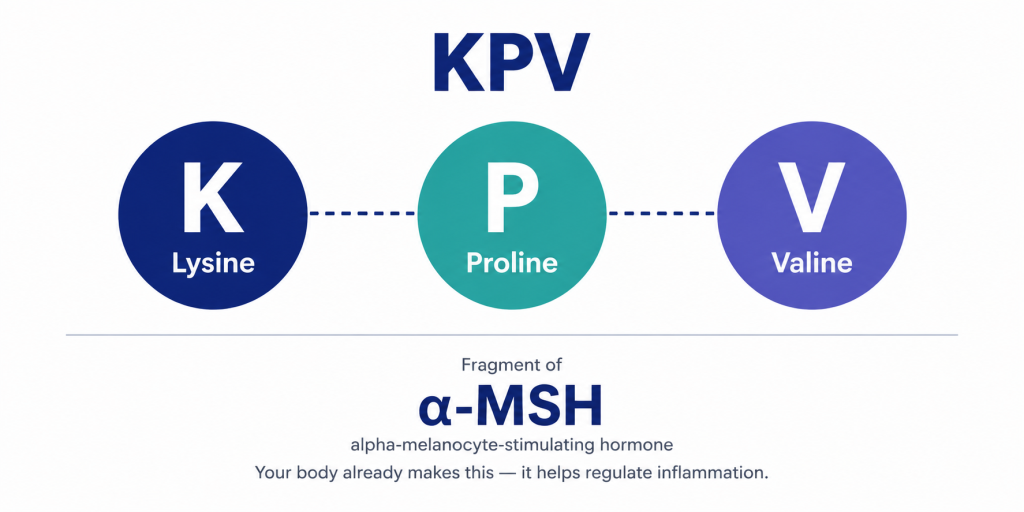
Think of alpha-MSH as a 13-amino-acid molecule. KPV is just the last three links of that chain. Researchers became interested in the fragment because it keeps the anti-inflammatory signaling of the full hormone but drops the part that triggers pigment changes (Brzoska 2008).
That’s the practical appeal. Full alpha-MSH and related melanocortin peptides can darken skin. KPV does not appear to, which makes it easier to study as a targeted anti-inflammatory (Brzoska 2008).
How KPV Works in the Body
KPV’s main job in research is turning down inflammation at the source. It does this through a few overlapping mechanisms that have been mapped mostly in cell and animal models.
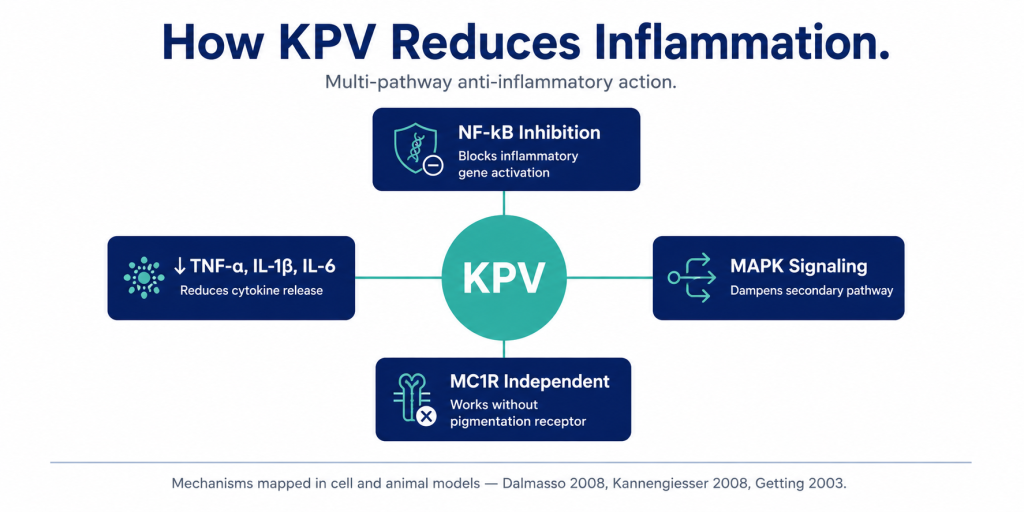
The central one is NF-kB inhibition. NF-kB is a transcription factor that switches on inflammatory genes, including those for TNF-alpha, IL-1beta, and IL-6. In cell-based research, KPV blocked NF-kB activation at nanomolar concentrations and reduced the release of these inflammatory signals (Dalmasso 2008).
KPV also dampens MAP kinase (MAPK) signaling, another inflammatory pathway, and lowers pro-inflammatory cytokine output from immune cells (Dalmasso 2008).
One detail stands out. KPV’s anti-inflammatory effect seems to work largely independent of the melanocortin-1 receptor (MC1R), the receptor tied to pigmentation. In animal models with a non-functional MC1R, KPV still reduced inflammation (Kannengiesser 2008). Researchers have proposed that KPV instead acts partly by interfering with IL-1beta activity (Getting 2003).
KPV Peptide Benefits
The studied benefits of KPV cluster around inflammation in four areas: the gut, the body as a whole, the skin, and microbial defense. The evidence is strongest for the gut and weaker as you move outward, so we’ll rank it that way.
Here’s how the evidence stacks up before the detail:
| Studied benefit | Evidence type | What was shown |
|---|---|---|
| Gut and intestinal inflammation | Animal + cell studies | Reduced colitis severity, better mucosal healing |
| Systemic inflammation | Animal studies | Lower inflammatory cell migration |
| Skin inflammation | Cell + animal studies | Signaling activity in keratinocytes |
| Antimicrobial activity | Cell studies | Activity against S. aureus and C. albicans |
Gut and Intestinal Inflammation
This is KPV’s most-studied use, and the evidence here is the strongest, though still preclinical. In mouse models of colitis, oral KPV reduced inflammation and disease severity (Dalmasso 2008).
In one study using two separate colitis models, KPV-treated mice recovered earlier, regained more body weight, and showed fewer inflammatory cells in colon tissue than untreated animals (Kannengiesser 2008).
A 2017 study took it further. Researchers packaged KPV into nanoparticles for oral delivery and saw improved mucosal healing and lower TNF-alpha in a mouse model of ulcerative colitis (Xiao 2017). Separate animal work also linked KPV’s gut activity to reduced colitis-associated tumor formation, an effect that disappeared when the PepT1 transporter was removed (Viennois 2016).
Systemic Inflammation
KPV’s anti-inflammatory activity isn’t limited to the gut. In an animal model of peritonitis, systemic KPV reduced the migration of inflammatory immune cells (Getting 2003).
What’s notable is the potency. Despite being only three amino acids, KPV produced anti-inflammatory effects in this model that researchers compared favorably to the full-length parent hormone (Getting 2003). A broad review of alpha-MSH peptides reached a similar conclusion across multiple inflammatory conditions (Brzoska 2008).
Skin Inflammation
KPV has been studied as a skin anti-inflammatory, mostly at the cellular level. In human keratinocytes, the skin’s main cell type, KPV triggered rapid intracellular calcium signaling at very low concentrations (Elliott 2004).
A review of alpha-MSH-derived peptides noted activity in models of contact dermatitis, vasculitis, and fibrosis (Brzoska 2008). Because KPV doesn’t drive pigmentation, it’s been flagged as a candidate for skin inflammation where tanning would be an unwanted effect (Brzoska 2008). Human skin trials are not yet available.
Antimicrobial Activity
KPV shows modest antimicrobial activity in cell-based research. In lab studies, KPV and related alpha-MSH peptides reduced growth of Staphylococcus aureus and the yeast Candida albicans (Cutuli 2000).
This dual profile, calming inflammation while also acting against microbes, is part of why KPV is studied for gut health, where infection and inflammation often overlap (Cutuli 2000). The antimicrobial data is in vitro only and shouldn’t be read as a reason to use KPV as an infection treatment.
Why KPV Works Orally When Most Peptides Don’t
Most peptides break down in the digestive tract, which is why they’re usually injected. KPV is an exception, and the reason is a transporter called PepT1.
PepT1 sits in the lining of the intestine and ferries small peptides into cells. KPV is small enough to hitch a ride (Dalmasso 2008).
The clever part is timing. PepT1 expression goes up in inflamed gut tissue. So inflamed areas pull in more KPV than healthy tissue does, which means an oral dose tends to concentrate where the inflammation actually is (Dalmasso 2008; Viennois 2016). That self-targeting behavior is the core reason oral KPV has been studied for gut conditions specifically.
KPV Peptide Oral vs. Injection: Which Route Fits Your Goal?
The right route depends on where you want KPV to act. Oral dosing is the most-studied route for gut-focused goals, while injection has been used in research for whole-body effects.
| Factor | Oral (capsule) | Injection (subcutaneous) |
|---|---|---|
| Best-studied target | Gut and intestinal lining | Systemic, whole-body inflammation |
| Delivery mechanism | PepT1 uptake in the gut | Bypasses the digestive tract |
| Convenience | Higher, no needles | Lower, requires reconstitution |
| Main research support | Animal colitis models | Animal peritonitis and skin models |
For gut inflammation, the oral route makes mechanistic sense because of PepT1 (Dalmasso 2008; Xiao 2017). For inflammation outside the gut, the injectable route has been the one used in systemic animal studies (Getting 2003). Neither route has human clinical trial backing yet.
KPV Peptide and Bodybuilding: What to Know
KPV is not a muscle-building or performance peptide, and it’s worth being direct about that. It has no anabolic activity, no growth hormone effect, and no research showing strength or muscle gains.
Where it shows up in fitness conversations is recovery. The interest is in managing exercise-related inflammation and gut issues that can sideline training, not in building tissue. That’s an inflammation-support rationale, and the underlying evidence is still animal and cell data.
If your goal is tissue repair or muscle recovery specifically, other peptides are studied more directly for that. KPV’s lane is inflammation, mainly in the gut.
KPV Peptide Side Effects and Safety
KPV has looked well tolerated in animal and cell research, but human safety data is the missing piece. Preclinical studies generally report low toxicity, with reported issues being mild and dose-related.
A few honest caveats matter more than any benefit claim:
- There are no large human clinical trials, so the long-term side effect profile in people is unknown.
- KPV is not approved by the FDA or EMA and is typically sold labeled for research use only.
- Anyone with an inflammatory condition, who is pregnant or nursing, or who takes medication should talk to a clinician before considering any peptide.
Treat the safety picture as incomplete rather than clean. Low toxicity in mice is encouraging, but it isn’t the same as proven safety in humans.
What to Look for in a KPV Capsule or Formula
If you’re evaluating a KPV product, the label tells you most of what you need. The goal is knowing exactly what you’re getting and whether an independent lab has confirmed it.
Focus on four things:
- Form and dose: The label should state the amount of KPV per capsule, not bury it in a proprietary blend.
- Third-party testing: Look for independent lab verification of purity and potency, not just an in-house claim.
- Certificate of Analysis (COA): A COA shows what the batch actually contains. Reputable brands make it available.
- Formula logic: In many capsule products, KPV is paired with other gut-support ingredients. The label should explain why each one is there.
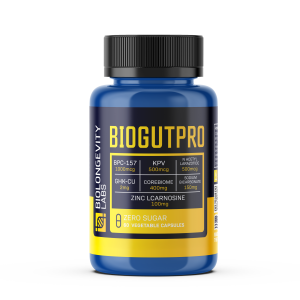
BioLongevity includes KPV in BioGutPro, a gut-focused capsule formula that pairs it with other ingredients aimed at intestinal barrier support, with third-party testing and a Certificate of Analysis behind each batch.
Frequently Asked Questions
What is KPV peptide used for?
KPV is studied mainly for anti-inflammatory support, with the strongest research in the gut. In animal models it reduced intestinal inflammation, and it’s also been examined for systemic and skin inflammation. All current evidence is preclinical.
Can you take KPV orally?
Yes, KPV is one of the few peptides with oral research behind it. A gut transporter called PepT1 actively pulls KPV into intestinal cells, and that transporter increases in inflamed tissue, which is why oral dosing has been studied for gut-related goals.
Is KPV oral or injection better?
It depends on the target. Oral dosing is the most-studied route for gut inflammation because of PepT1 uptake, while injection has been used in research for whole-body inflammation. Neither route has been tested in large human trials.
Does KPV help with bodybuilding?
Not directly. KPV has no anabolic or performance effect and no research showing muscle or strength gains. Its relevance to training is inflammation and gut support, not tissue building.
What are the side effects of KPV?
In animal and cell studies, KPV has appeared well tolerated with mild, dose-related issues. Human long-term safety data does not exist yet, and KPV is sold as a research compound rather than an approved supplement or drug.
Is KPV the same as alpha-MSH?
No. KPV is the last three amino acids of alpha-MSH. It keeps the anti-inflammatory signaling of the full hormone but, unlike alpha-MSH, does not appear to cause skin tanning.
Ask a qualified clinician before starting any supplement if you are pregnant, nursing, taking medication, or managing a medical condition.
These statements have not been evaluated by the Food and Drug Administration. This product is not intended to diagnose, treat, cure, or prevent any disease.
References
[1] Dalmasso G, Charrier-Hisamuddin L, Nguyen HT, Yan Y, Sitaraman S, Merlin D. PepT1-mediated tripeptide KPV uptake reduces intestinal inflammation. Gastroenterology. 2008;134(1):166-78. doi:10.1053/j.gastro.2007.10.026
[2] Kannengiesser K, Maaser C, Heidemann J, et al. Melanocortin-derived tripeptide KPV has anti-inflammatory potential in murine models of inflammatory bowel disease. Inflammatory Bowel Diseases. 2008;14(3):324-31. doi:10.1002/ibd.20334
[3] Getting SJ, Schiöth HB, Perretti M. Dissection of the anti-inflammatory effect of the core and C-terminal (KPV) alpha-melanocyte-stimulating hormone peptides. Journal of Pharmacology and Experimental Therapeutics. 2003;306(2):631-7. doi:10.1124/jpet.103.051623
[4] Brzoska T, Luger TA, Maaser C, Abels C, Böhm M. Alpha-melanocyte-stimulating hormone and related tripeptides: biochemistry, antiinflammatory and protective effects in vitro and in vivo, and future perspectives for the treatment of immune-mediated inflammatory diseases. Endocrine Reviews. 2008;29(5):581-602. doi:10.1210/er.2007-0027
[5] Elliott RJ, Szabo M, Wagner MJ, Kemp EH, MacNeil S, Haycock JW. alpha-Melanocyte-stimulating hormone, MSH 11-13 KPV and adrenocorticotropic hormone signalling in human keratinocyte cells. Journal of Investigative Dermatology. 2004;122(4):1010-9. doi:10.1111/j.0022-202X.2004.22404.x
[6] Cutuli M, Cristiani S, Lipton JM, Catania A. Antimicrobial effects of alpha-MSH peptides. Journal of Leukocyte Biology. 2000;67(2):233-9. doi:10.1002/jlb.67.2.233
[7] Xiao B, Xu Z, Viennois E, et al. Orally Targeted Delivery of Tripeptide KPV via Hyaluronic Acid-Functionalized Nanoparticles Efficiently Alleviates Ulcerative Colitis. Molecular Therapy. 2017;25(7):1628-1640. doi:10.1016/j.ymthe.2016.11.020
[8] Viennois E, Ingersoll SA, Ayyadurai S, et al. Critical role of PepT1 in promoting colitis-associated cancer and therapeutic benefits of the anti-inflammatory PepT1-mediated tripeptide KPV in a murine model. Cellular and Molecular Gastroenterology and Hepatology. 2016;2(3):340-357. doi:10.1016/j.jcmgh.2016.01.006