


The best hormone balance supplements for women depend on the specific goal, life stage, and any confirmed nutrient gap. No single capsule can “balance” estrogen, progesterone, insulin, thyroid hormones, and cortisol at once. Evidence is most useful when it connects one ingredient to one defined outcome, such as premenstrual symptoms, metabolic measures in PCOS, or menopausal symptoms.
Key Takeaways

The Short Version
“Hormone balance” is a broad marketing phrase, not one measurable health state.
Calcium, vitamin B6, and zinc have some human evidence for premenstrual symptoms, but study quality is uneven.
Inositol and soy isoflavones may fit specific clinical contexts, not every woman’s routine.
A transparent label, independent testing, and clinician input matter more than a long ingredient list.
What Does “Hormone Balance” Mean?
Hormones are chemical messengers produced by several organs and tissues. They work in connected systems that respond to age, sleep, stress, nutrition, medications, pregnancy, the menstrual cycle, and menopause. A change in one signal does not mean the entire endocrine system is “out of balance.”
That is why the most useful question is narrower: which symptom or health goal are you trying to address, and what evidence supports a particular ingredient for that outcome? BioLongevity’s hormone and organ health collection organizes products by target system, while this guide focuses on the human evidence behind common nonprescription ingredients.
A useful rule: if a product promises to reset several hormones without naming the population, outcome, study design, or ingredient amount, the promise is broader than the evidence.
Start with the Health Context, Not the Supplement
The phrase “hormone support” can refer to several very different needs. Separating them helps you avoid buying a product designed for someone else’s life stage or medical context.
| Health context | What the evidence can address | What it cannot establish |
|---|---|---|
| Premenstrual symptoms | Whether a nutrient changed a defined physical or psychological symptom score in a trial | That the nutrient corrected a universal “hormone imbalance” |
| PCOS | Effects on selected metabolic, hormonal, or reproductive outcomes in diagnosed patients | That a supplement can diagnose PCOS or replace clinician-guided care |
| Perimenopause or menopause | Changes in specific symptoms such as hot flashes or night sweats | That one supplement restores premenopausal hormone levels |
| General fatigue, mood, or sleep concerns | Support for a documented nutrient gap or a clearly defined wellness outcome | That vague symptoms prove a hormone problem |
Products grouped around mood, stress resilience, and libido support can still serve different purposes. The label and evidence should make that purpose clear.
Which Supplements Have Meaningful Evidence?

Evidence quality varies by ingredient and outcome. These categories have human research, but none supports the idea that a supplement can balance every hormone.
Calcium, vitamin B6, and zinc for premenstrual symptoms
A 2024 systematic review examined 31 randomized controlled trials involving 3,254 participants. Vitamin B6, calcium, and zinc showed the most consistent positive findings for psychological premenstrual symptoms. The same review found that only one included study had a low risk of bias, so the authors stopped short of making conclusive recommendations. Magnesium, vitamin D, multivitamins, and several dietary approaches did not have enough consistent evidence for those psychological outcomes.
This is a good example of evidence with a boundary. A nutrient may help a defined symptom in some people without changing the underlying hormone cycle. Persistent or severe premenstrual symptoms deserve medical assessment rather than a larger supplement stack.
Vitamin D when status is low
Vitamin D is involved in many normal body functions, but the case for taking it specifically as a “hormone balancer” is unsettled. A 2019 systematic review reported associations between lower calcium or vitamin D status and premenstrual symptoms and found some supportive intervention data. The newer 2024 review above judged the vitamin D evidence insufficient for psychological premenstrual symptoms.
The practical takeaway is to treat vitamin D as a nutrient with a measurable status, not a catch-all answer. Testing and clinical context can show whether a gap exists and whether supplementation belongs in your routine.
Inositol in the context of diagnosed PCOS
Inositol is often sold as a hormone support ingredient because it participates in cell signaling. The strongest reason to discuss it is more specific: researchers have studied myo-inositol and D-chiro-inositol in women with PCOS.
A 2024 systematic review and meta-analysis prepared for the international evidence-based PCOS guideline included 30 trials with 2,230 participants. It found possible benefits for some metabolic measures and potential effects on ovulation, but little or no effect on other outcomes. The authors called the overall evidence limited and inconclusive.
That makes inositol a clinician-guided option for a defined condition, not a universal supplement for women. It should not be used to self-diagnose irregular cycles, fertility concerns, or signs of androgen excess.
Soy isoflavones for menopausal symptoms
Soy isoflavones are phytoestrogens, plant compounds that interact with estrogen receptors differently from human estrogen. A 2022 systematic review and meta-analysis of randomized trials reported changes in an overall menopausal symptom score and estradiol, but the studies were highly heterogeneous. The authors advised caution and called for larger trials.
This evidence may be relevant to some postmenopausal women. It does not show that isoflavones “restore estrogen” or replace menopausal hormone therapy. A clinician can help weigh personal history, symptoms, medications, and preferences.
Omega-3s for general health, not reliable hot-flash control
Omega-3 fatty acids have established nutritional roles, but menopausal symptom claims are less certain. A 2018 systematic review and meta-analysis found only three eligible randomized trials. Omega-3 supplements may have helped night sweats, but they did not improve hot flashes, sleep quality, or overall quality of life. The authors concluded that the evidence was insufficient.
If omega-3s belong in your routine for another reason, that is a separate decision. Their general nutritional value should not be repackaged as proof of hormone balancing.
What Should You Look for on the Label?
A supplement can have a promising ingredient and still be a poor buy. Quality questions matter because research on an ingredient does not automatically validate every finished formula.
- A specific purpose: the product should name the normal function or wellness outcome it is designed to support.
- Clear ingredient identity: look for the ingredient form and amount instead of a proprietary blend that hides the details.
- Independent verification: a current Certificate of Analysis should confirm identity, purity, or potency for the product or batch. BioLongevity publishes a Certificate of Analysis library.
- Claims that match the evidence: “supports” and “helps maintain” are more credible than promises to reset, restore, cure, or reverse.
- Safety information: the label should identify important warnings, and the company should make common questions easy to answer. BioLongevity’s supplement quality and ingredient FAQs explain its testing and label approach.
If advanced ingredients are new to you, the beginner’s guide to longevity supplements offers a broader framework for comparing product types and quality standards.
Where Do Peptide Bioregulators Fit?
Peptide bioregulators are a separate category from vitamins, minerals, fatty acids, and isoflavones. BioLongevity’s gland-by-gland guide to hormone peptides for women explains the difference between signaling peptides and tissue-specific peptide complexes. That article is the better starting point if your question is about peptides rather than common nutritional supplements.
For ovarian peptide research specifically, the Zhenoluten evidence guide reviews the available literature and its limits. That evidence should be judged on its own. Findings on vitamin D, inositol, or soy isoflavones do not substantiate a peptide formula.
Targeted options, clearly separated
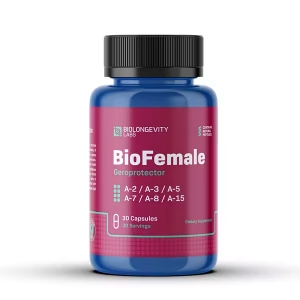
BioOvary with peptide complex A-15 is an ovary-focused peptide bioregulator. BioFemale GPL Femme combines peptide complexes associated with several tissues in one formula. Neither product should be described as balancing every hormone or as a substitute for diagnosis, prescription treatment, or menopausal hormone therapy.
When Should You Speak with a Clinician First?
Talk with a qualified clinician before adding a hormone-focused supplement if you are pregnant, nursing, trying to conceive, taking medication, preparing for surgery, or managing a medical condition. Seek medical care for new, severe, persistent, or rapidly changing symptoms rather than assuming they come from hormones.
A clinician can decide whether symptoms call for an examination, testing, or treatment. That step can prevent two common mistakes: supplementing a nutrient you do not need and delaying care for a condition that requires a different approach. BioLongevity also publishes information about its expert review board and editorial standards so readers can see how health content is reviewed.
Common Questions About Hormone Balance Supplements for Women
These short answers cover the questions that broad “hormone support” labels often leave unresolved.
Do hormone balance supplements work?
Some ingredients have human evidence for specific outcomes in defined groups. The evidence does not support one supplement balancing all female hormones. Match the ingredient to the health context and check whether the research measured the outcome you care about.
Do I need hormone testing before taking a supplement?
Not every wellness goal requires hormone testing, but symptoms alone cannot identify a specific hormone problem. A clinician can determine whether testing is appropriate and interpret the result in relation to your cycle, age, health history, and medications.
Can supplements replace hormone therapy, thyroid medication, or birth control?
No. A dietary supplement should not replace prescribed treatment unless the clinician managing that treatment changes the plan. Ingredient studies also cannot establish that a retail formula is equivalent to a medication.
Are natural hormone support products automatically safer?
No. “Natural” does not guarantee safety, purity, or a good fit for your health history. Check the full label, independent testing, warnings, and possible interactions before you buy.
The Bottom Line
The strongest approach to hormone support is specific. Name the symptom or life stage, rule out problems that need medical care, and choose an ingredient only when its human evidence matches that goal. Good products make the formula and testing easy to verify. They do not ask one vague phrase to carry the whole claim.
References
- Robinson JRM, Ferreira A, Iacovou M, Kellow NJ. Effect of nutritional interventions on the psychological symptoms of premenstrual syndrome in women of reproductive age: a systematic review of randomized controlled trials. Nutrition Reviews. 2025;83(2):280-306. doi:10.1093/nutrit/nuae043.
- Abdi F, Ozgoli G, Rahnemaie FS. A systematic review of the role of vitamin D and calcium in premenstrual syndrome. Obstetrics & Gynecology Science. 2019;62(2):73-86. doi:10.5468/ogs.2019.62.2.73.
- Fitz VW, Graca S, Mahalingaiah S, et al. Inositol for polycystic ovary syndrome: a systematic review and meta-analysis to inform the 2023 update of the international evidence-based PCOS guidelines. Journal of Clinical Endocrinology & Metabolism. 2024;109:1630-1655. doi:10.1210/clinem/dgad762.
- Kang I, Rim CH, Yang HS, et al. Effect of isoflavone supplementation on menopausal symptoms: a systematic review and meta-analysis of randomized controlled trials. Nutrition Research and Practice. 2022;16(Suppl 1):S147-S159. doi:10.4162/nrp.2022.16.s1.s147.
- Mohammady M, Janani L, Jahanfar S, Mousavi MS. Effect of omega-3 supplements on vasomotor symptoms in menopausal women: a systematic review and meta-analysis. European Journal of Obstetrics & Gynecology and Reproductive Biology. 2018;228:295-302. doi:10.1016/j.ejogrb.2018.07.008.